
Last updated September 22, 2026
Full 25-point door and opener safety check with every visit - springs, cables, rollers, tracks, and your LiftMaster or Chamberlain opener included
You get a price before we start. It does not change when the truck arrives.
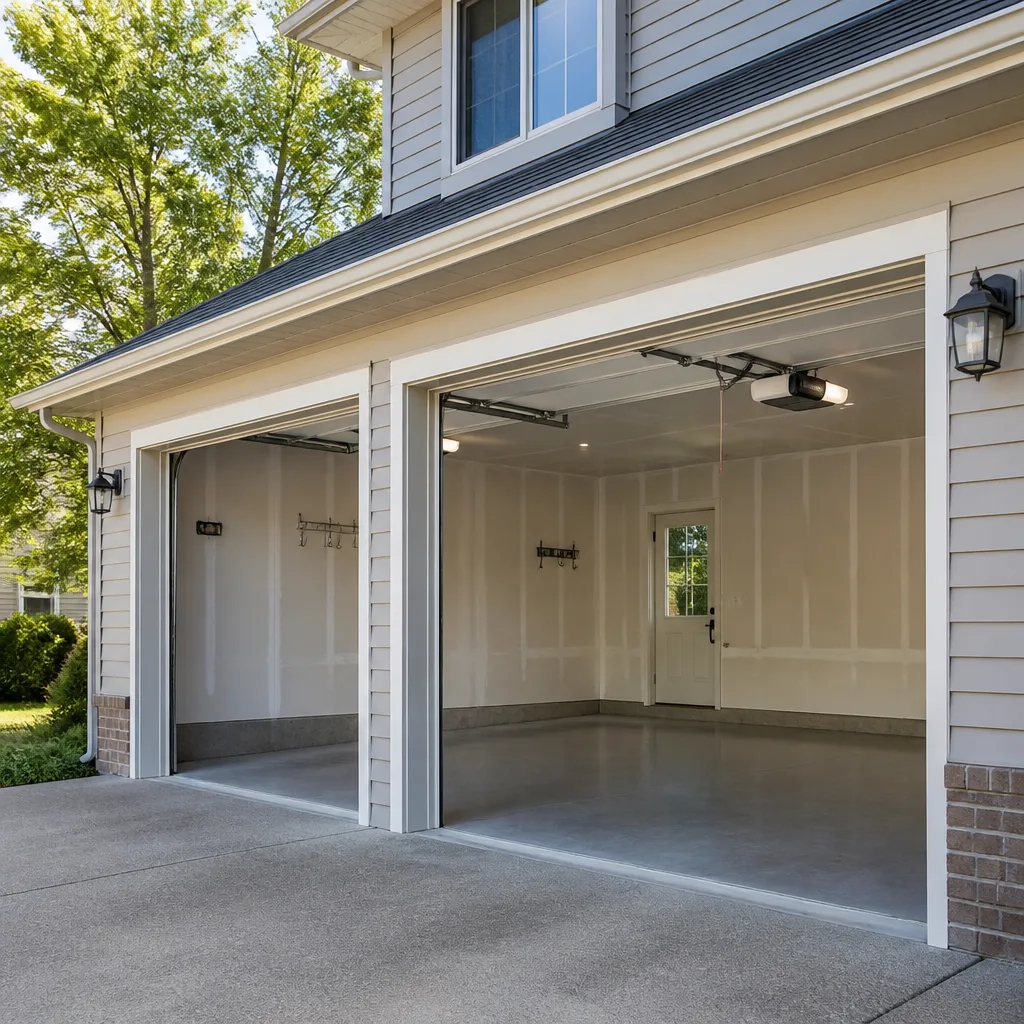
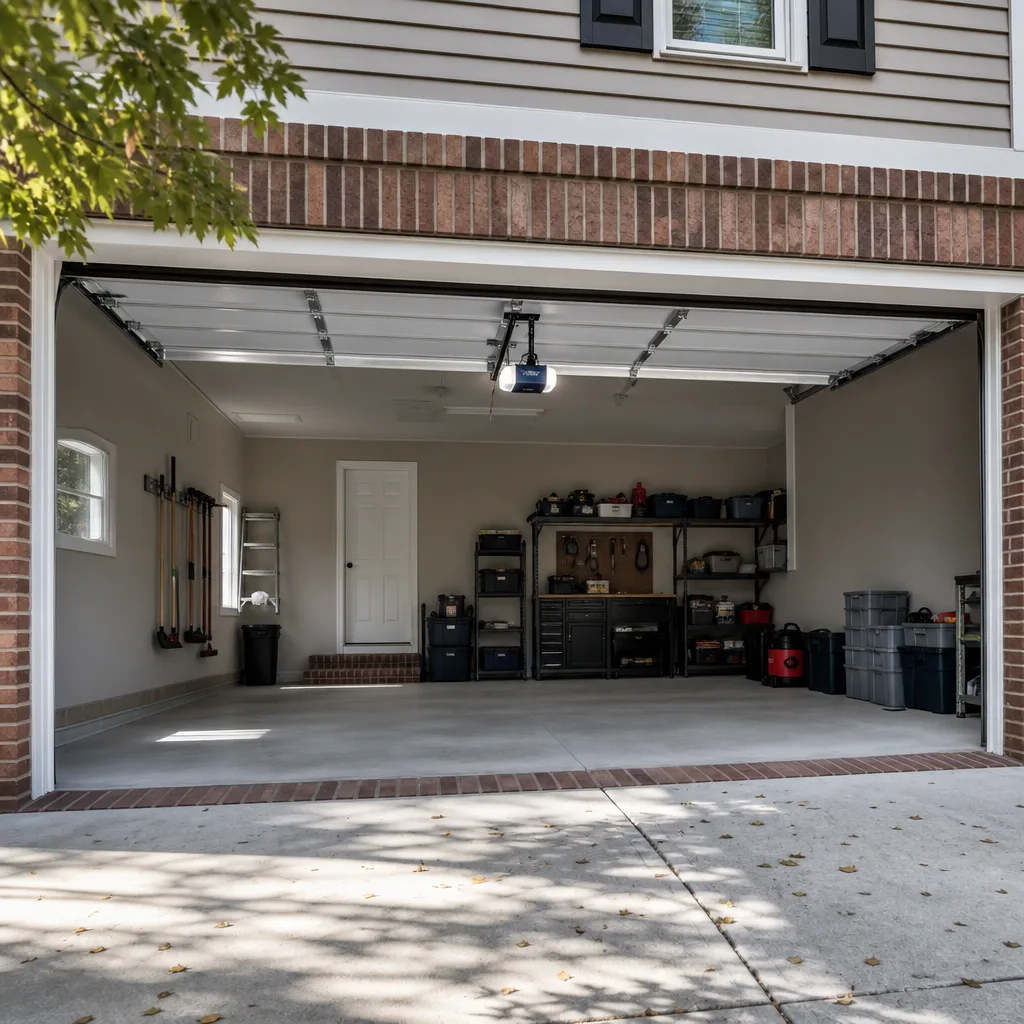
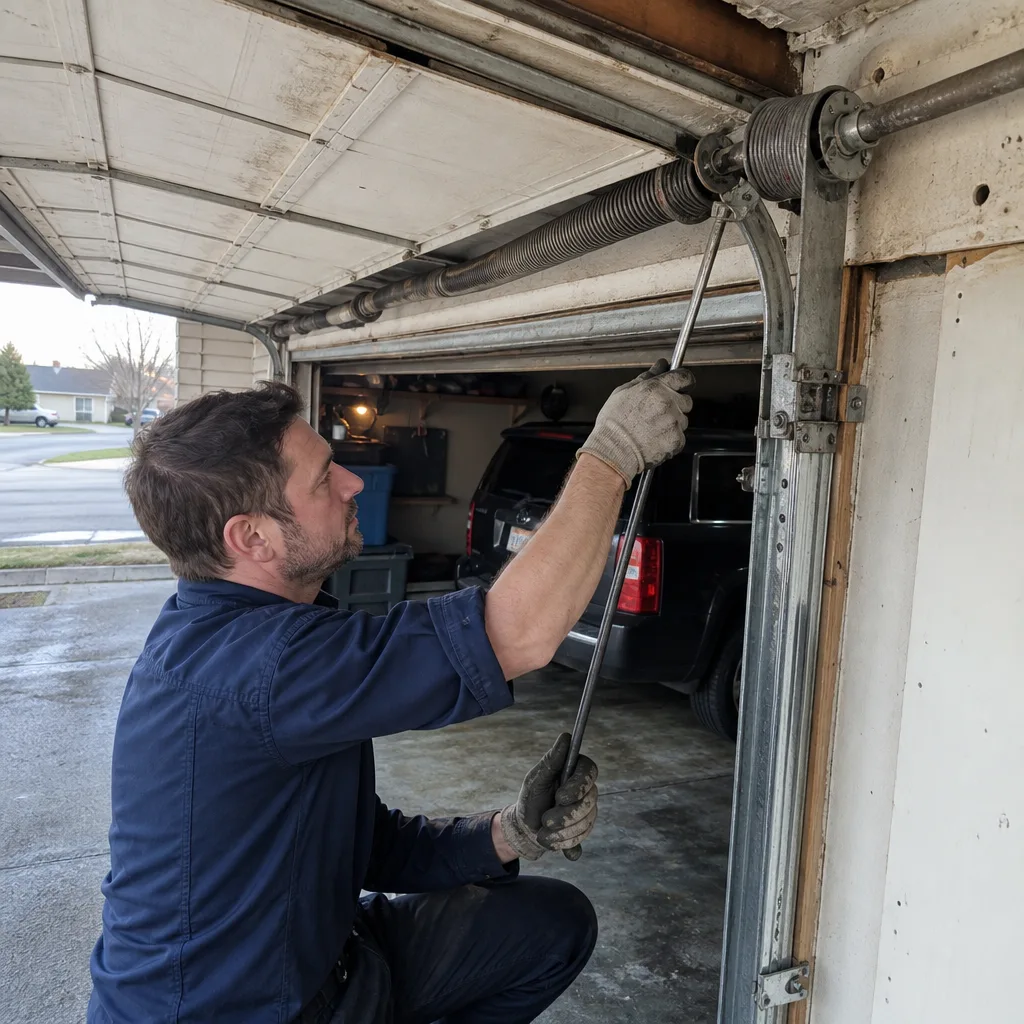 Before
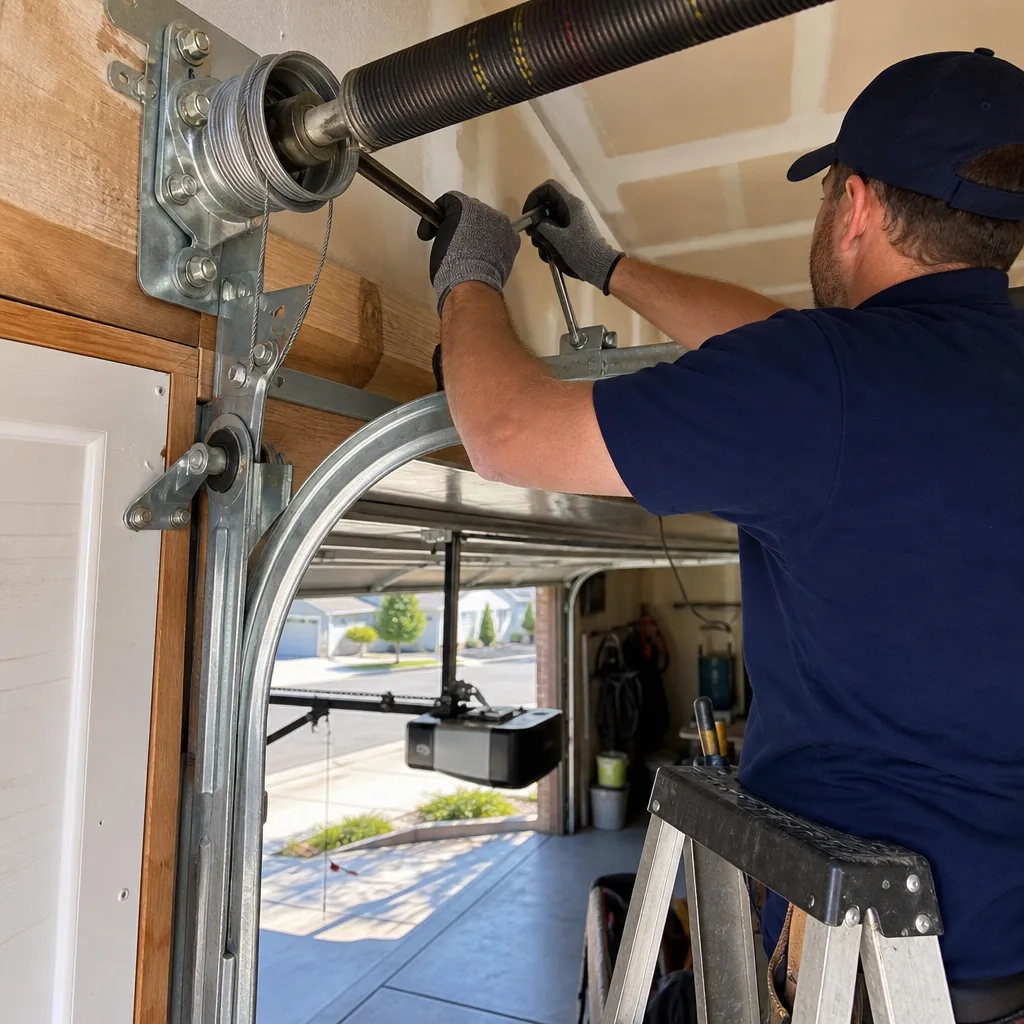 After
After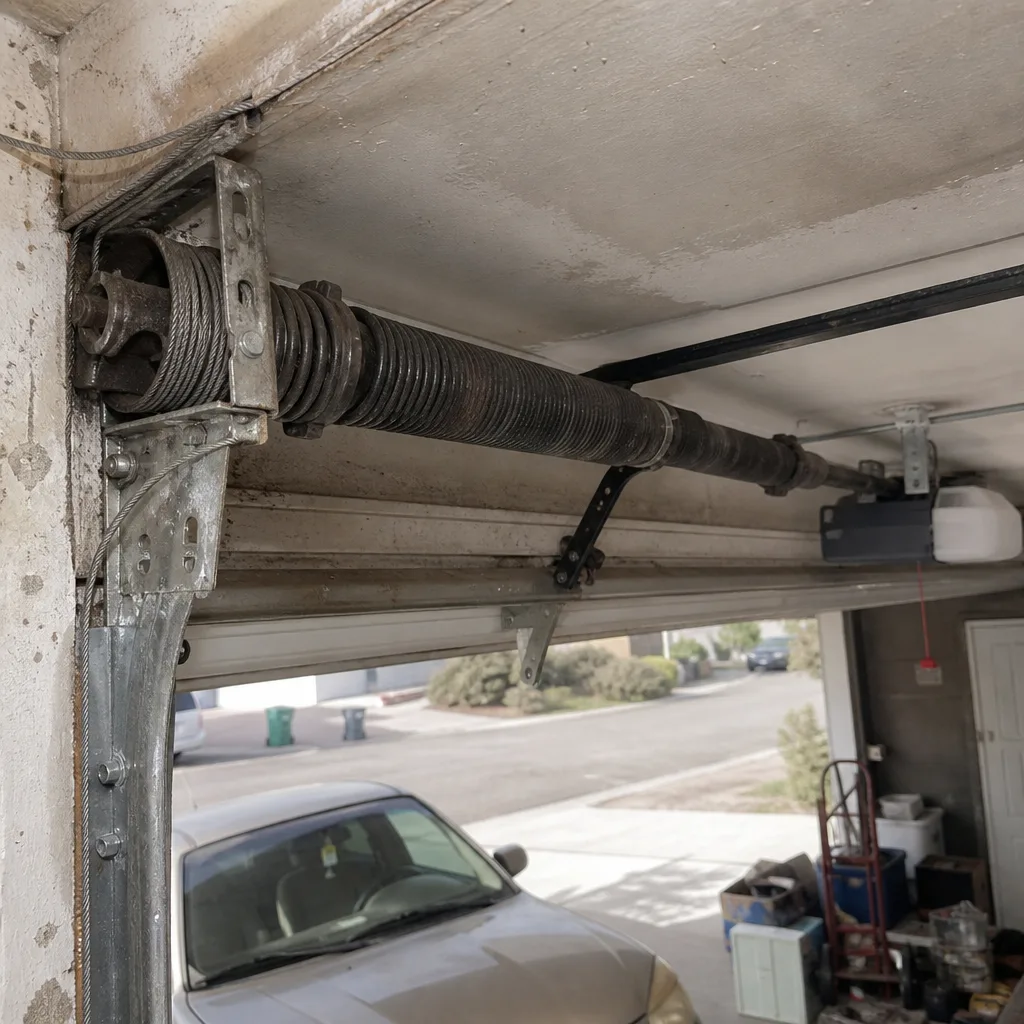 Before
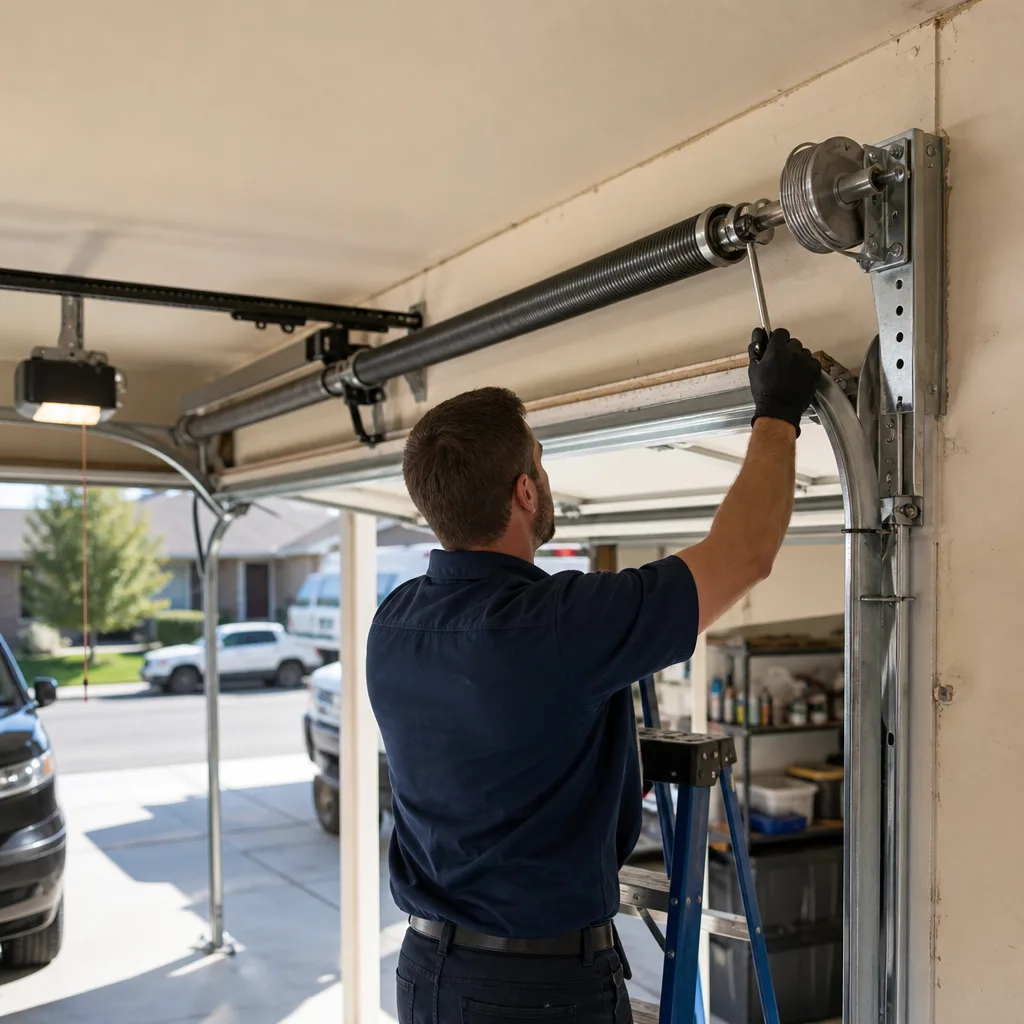 After
After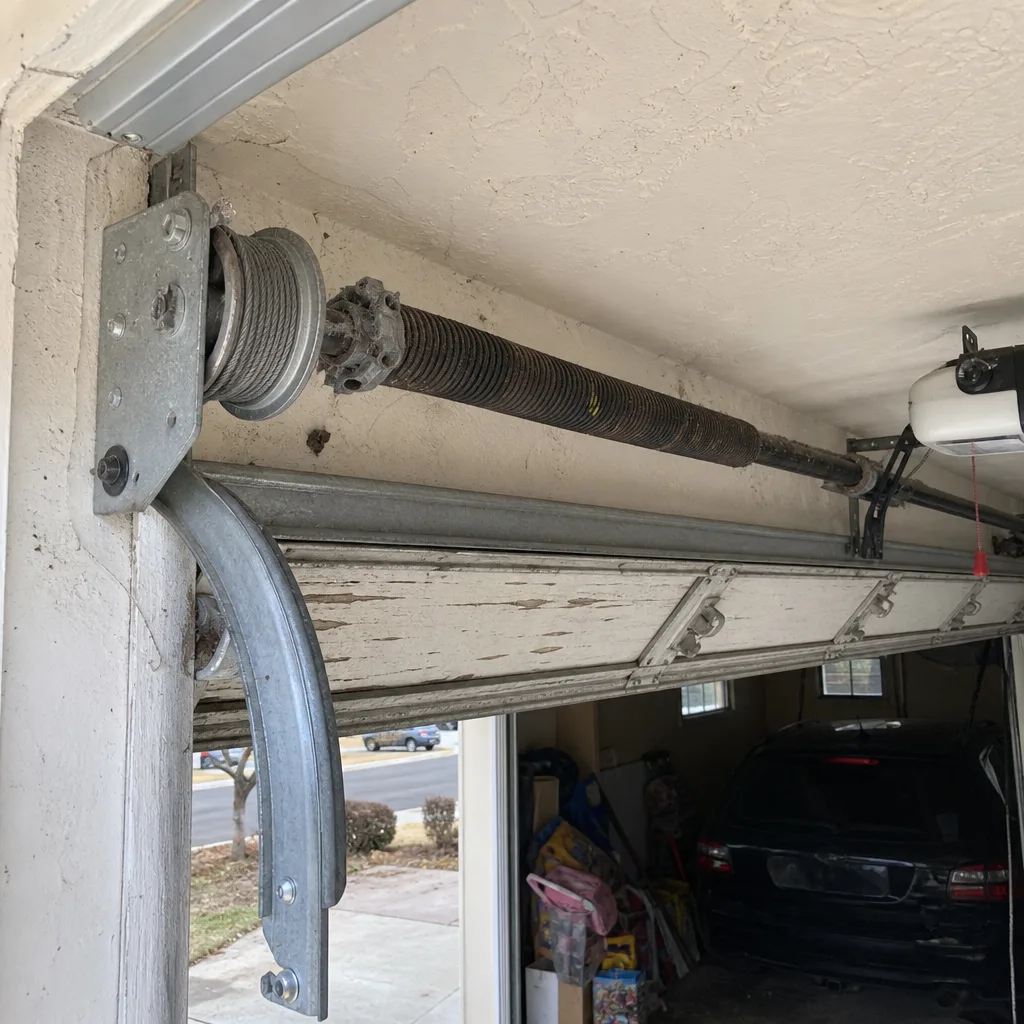 Before
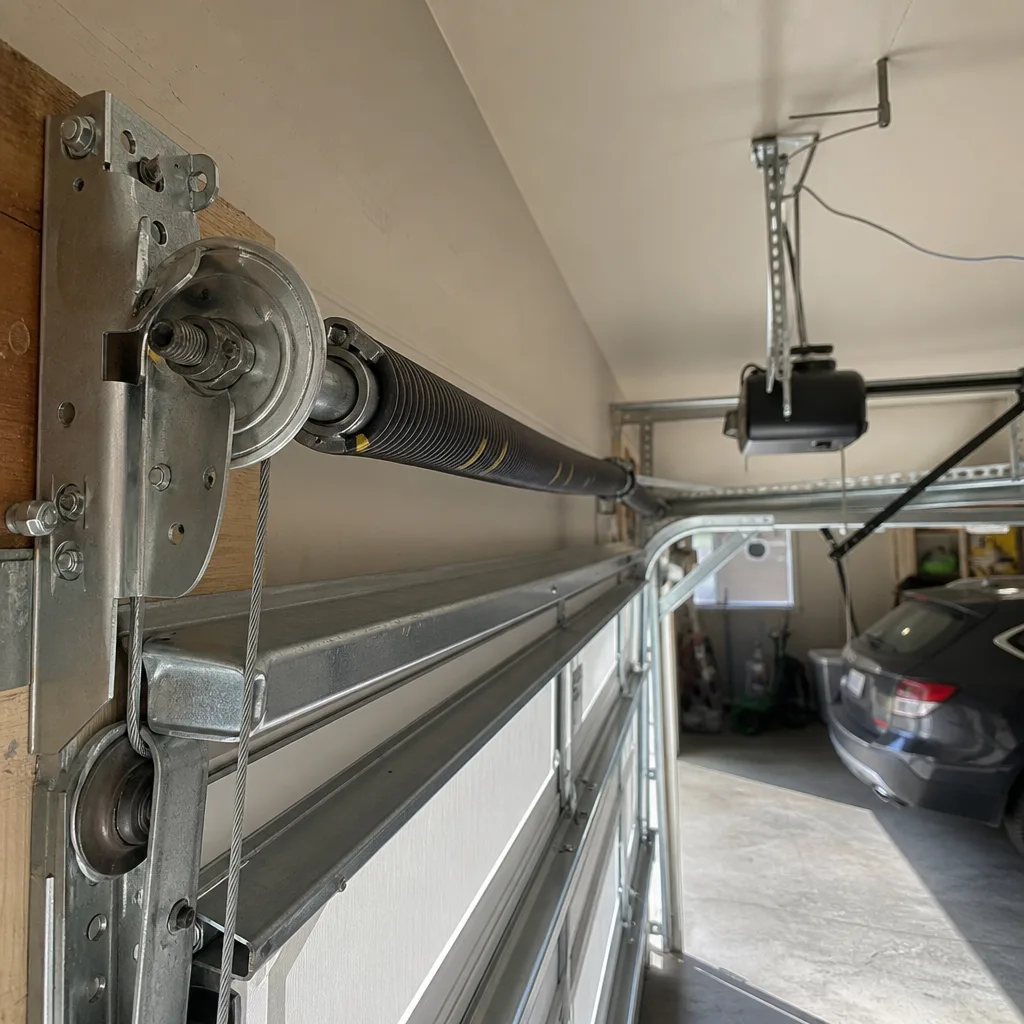 After
AfterGarage Door Warning Signs: A Aurora Homeowner’s Reference Guide
A garage door that reverses before hitting the floor is almost always described to technicians as “the sensor is broken.” In Aurora’s cold months, the more common cause is a warped bottom seal creating resistance the opener’s force limit interprets as an obstruction - a $60 fix versus a $150 sensor replacement. Most warning signs are misread because the symptom points to one component while the actual failure is elsewhere. This guide - alongside our complete guide to garage doors in Aurora - maps what you’re seeing and hearing to the specific part that’s failing, so you know whether you’re looking at a same-week repair or something you can monitor. We’ve built this from 18,000+ garage doors made right since 2015, including thousands of homes across Aurora’s neighborhoods from Tallyn’s Reach to Original Aurora.
Quick Answer
The most reliable garage door warning signs are: slow travel speed (a 12-second door that now takes 18+ seconds), visible gaps in torsion spring coils, and a grinding noise from the opener’s trolley carriage. These three indicators predict failure before it happens. Noise alone is less predictive than speed change, because a door can squeal for years while a slow door often fails within weeks.
Table of Contents
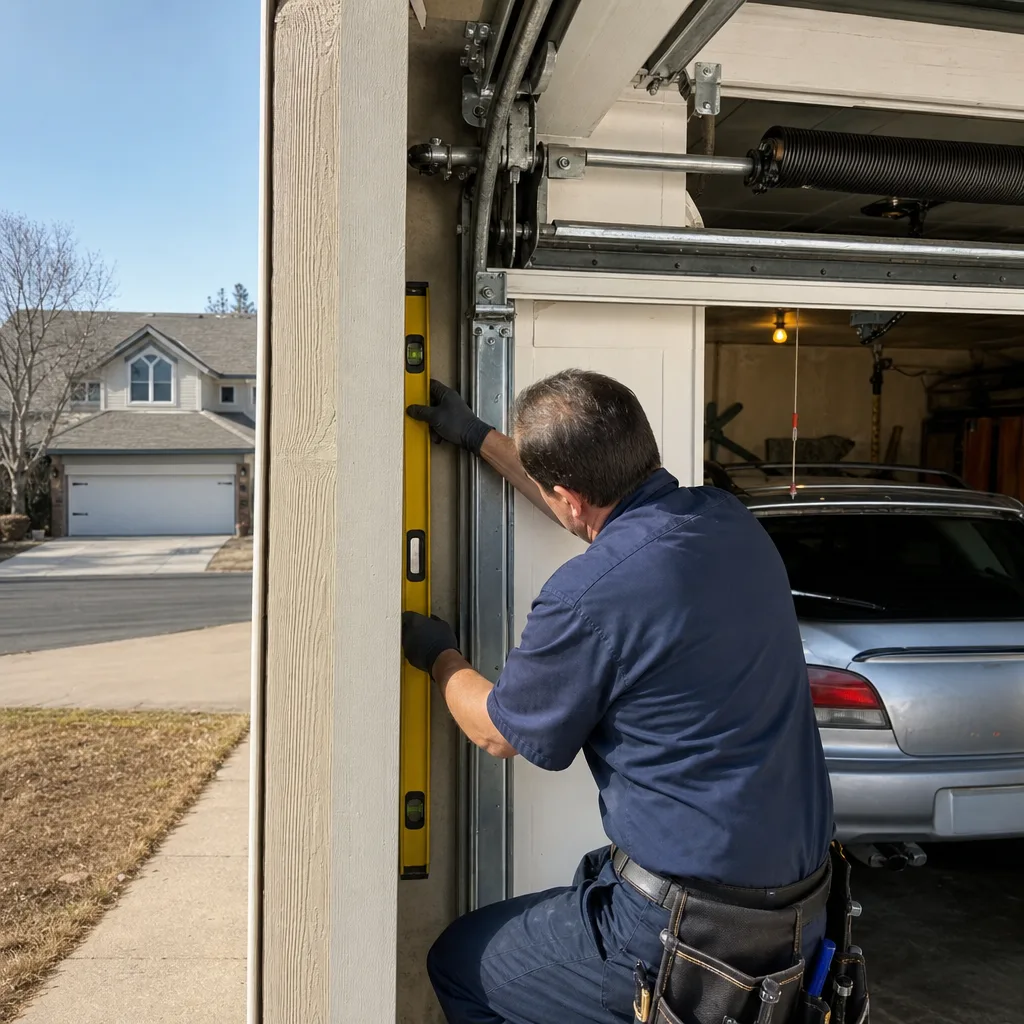
- Noise Decoded: What Each Sound Means
- Visual Signs of Torsion Spring Failure
- Cable Problem or Spring Problem? How to Tell
- Why Slow Travel Speed Is Your Best Early Warning
- Opener Warning Signs: Motor, Logic Board, and Safety Systems
- Track, Roller, and Hardware Red Flags
- Warning Signs by Urgency: Monitor, Schedule, or Call Now
- How Aurora’s Climate Accelerates Specific Failures
BeforeAfterNoise Decoded: What Each Sound Means
Homeowners in Aurora describe garage door noises in about six ways, and each description points to a different component. The mistake is treating “it’s loud” as one problem. Here’s what we’ve found across 18,000+ service calls, including the homes near Buckley Space Force Base where wind-blown grit accelerates wear.
Grinding
Grinding comes from metal-on-metal contact where lubrication has failed or a bearing has seized. The most common source is the opener’s trolley carriage, the component that travels along the rail and connects the motor to the door. When the trolley’s internal gears strip or its shuttle wears, you hear a low, continuous grind during the entire cycle. In Aurora’s dry winters, the trolley carriage on older Chamberlain and LiftMaster openers often grinds before it fails completely - sometimes giving two to three weeks of warning.
Less commonly, grinding comes from a seized roller in the track. Rollers should spin freely; when a bearing fails, the roller drags and grinds against the track wall. This is urgent because a dragging roller puts lateral force on the track itself, eventually bending the vertical section.
Popping
A single loud pop, especially at the start of opening, usually means a torsion spring coil has slipped or a winding cone has shifted on the shaft. The pop is the sound of stored energy releasing suddenly. If you hear this once, the spring system is compromised. We’ve seen springs hold for months after a pop, and we’ve seen them break the same day. The safe approach is same-week service, not same-day panic.
In Aurora’s older neighborhoods like Original Aurora, where many homes still have their original 1980s and 1990s doors, popping often precedes a spring break by one to three weeks. The spring isn’t broken yet, but a coil has deformed or the set screws on the winding cone have loosened.
Squealing or Screeching
High-pitched squealing is almost always rollers or hinges needing lubrication. It’s annoying, not urgent. The exception is a screech that starts suddenly and worsens rapidly - this can indicate a roller bearing has failed and the roller is now sliding, not rolling, in the track. Check visually: a healthy roller spins when you lift the door manually (disengage the opener first). A failed roller stays fixed while the door moves past it.
Rhythmic Clicking
A click every second or so during door travel points to the opener’s limit switch or the safety sensor circuit. The click is the logic board attempting to read position and failing. On Genie openers, this often precedes limit switch failure by two to four weeks. On LiftMaster and Chamberlain chain-drive units, rhythmic clicking can indicate a stripped drive gear inside the motor housing - the gear teeth are skipping, creating the regular interval.
Rattling or Shaking
Rattling that worsens as the door rises usually means loose hardware: lag screws backing out of the header bracket, roller bolts loosening, or track brackets vibrating against the jamb. In Aurora, the freeze-thaw cycle from November through March loosens fasteners faster than in milder climates. We’ve found header brackets with half their fasteners missing in homes near the High Line Canal, where temperature swings are sharpest.
Key distinction: Grinding and popping indicate component failure. Squealing indicates maintenance need. Clicking indicates electrical or control failure. Rattling indicates hardware loosening. Each has a different repair cost, urgency, and whether you should operate the door in the meantime.
Visual Signs of Torsion Spring Failure
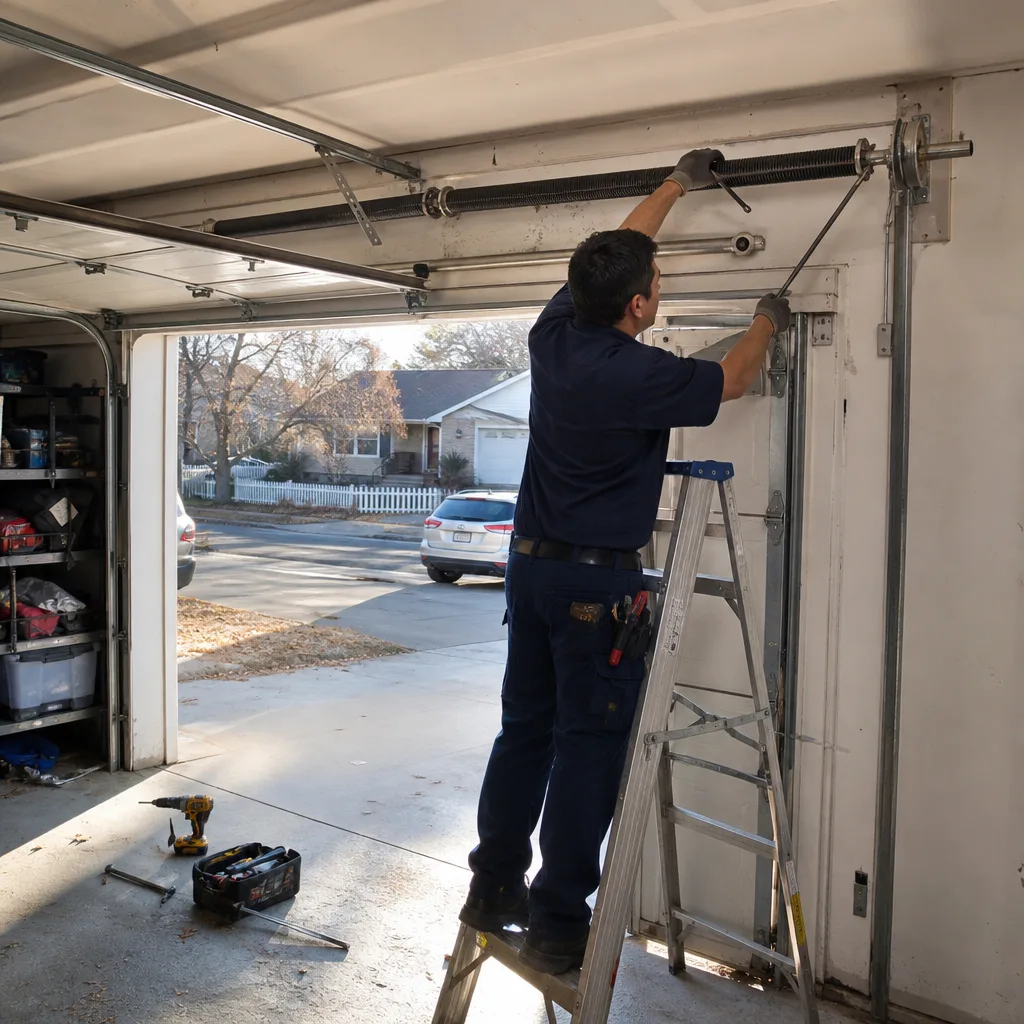
Torsion springs store massive energy - enough to lift a 200-pound door with one hand. When they fail, they can damage property and cause serious injury. The good news is that most torsion springs show visible warning signs weeks before they break, and you can observe these from ground level without touching anything.
Gap in the Coil
A healthy torsion spring sits with its coils tightly touching. A gap of even one-eighth inch between adjacent coils means the spring has lost tension and is beginning to unwind. This gap often appears first at the center of the spring, where stress concentrates. In our experience across Aurora, a visible gap precedes complete failure by two to six weeks in cold weather, longer in summer.
Rust Streaking or Pitting
Aurora’s semi-arid climate means less rust than coastal cities, but road salt and garage-floor moisture still corrode springs. Look for orange-brown streaking along the coil, especially at the bottom where condensation collects. Pitting - tiny craters in the metal surface - weakens the wire and creates stress risers where cracks start. A pitted spring can break with no other warning.
Coil Deformation
Healthy torsion spring coils are uniform circles. If you see a coil that’s oval, kinked, or sitting at an angle to its neighbors, the spring has been overloaded or improperly wound. This deformation concentrates stress and accelerates fatigue. We’ve replaced springs in Southshore homes where a previous installer used an incorrect wire diameter, causing visible coil distortion within two years.
End-of-Life Timing
Standard torsion springs are rated for 10,000 cycles (one open-close pair). A typical Aurora household cycles their door 3-4 times daily, so a spring lasts 7-9 years. If your spring is approaching this age and you see any visual warning, schedule replacement. Waiting for the break risks the door slamming shut, damage to the opener’s top section, and the inconvenience of a trapped vehicle.
Safety note: Never attempt to adjust or replace a torsion spring. The winding cone holds lethal tension, and improper tools can slip without warning. This is not a DIY project. Our technicians carry winding bars, vise grips, and torsion cables specifically rated for this work, and Clause 4 of The Haven Standard requires photographing the failed spring before quoting replacement.
Cable Problem or Spring Problem? How to Tell
Cable failure and spring failure produce similar symptoms: a crooked door, a door that won’t stay open, or a loud bang. But the repair cost differs by $100-$200, and the immediate risk profile is different. Here’s how to distinguish them from the ground.
What the Cables Do
Extension springs (along the horizontal tracks) and torsion springs (above the door) both use cables to transfer lifting force to the door bottom. Cables wrap around drums at the ends of the torsion shaft, or connect to the bottom brackets on extension-spring doors. When a cable frays, unwinds from its drum, or snaps, the door loses support on one side.
Visual Inspection: Three Steps
- Look at the cables while the door is closed. Fraying appears as unwound wire strands sticking out from the cable braid, like a frayed rope. Any fraying means the cable is near failure. We’ve seen frayed cables snap the same day and hold for months - there’s no reliable predictor, so fraying equals replacement.
- Check if both cables are on their drums. A cable that’s slipped off the drum hangs loose or wraps incorrectly. This happens when a spring breaks unevenly, when the door hits an obstruction, or when a cable wasn’t properly tensioned during installation. A door with one cable off the drum will run crooked and can jam in the tracks.
- Look for a broken spring above the door. A broken torsion spring has a visible gap, typically two to four inches, with the two ends of the spring separated. The cable may still look intact, but it’s no longer under proper tension because the spring isn’t transferring force.
The Symptom That Decides It
If the door is crooked and one cable is slack or off the drum, but the spring looks intact, you have a cable problem. If the door won’t lift and you see a gap in the spring, you have a spring problem. If both symptoms appear together, the spring likely broke first and the cable derailed as a secondary effect.
Cost context for Aurora homeowners: Cable replacement typically runs $120-$180 including labor. Torsion spring replacement is $180-$340 depending on wire diameter and door weight. Knowing which you’re dealing with helps you evaluate estimates. We provide free second opinions on any written estimate from another company - bring the paperwork, no coupon required.
Why Slow Travel Speed Is Your Best Early Warning
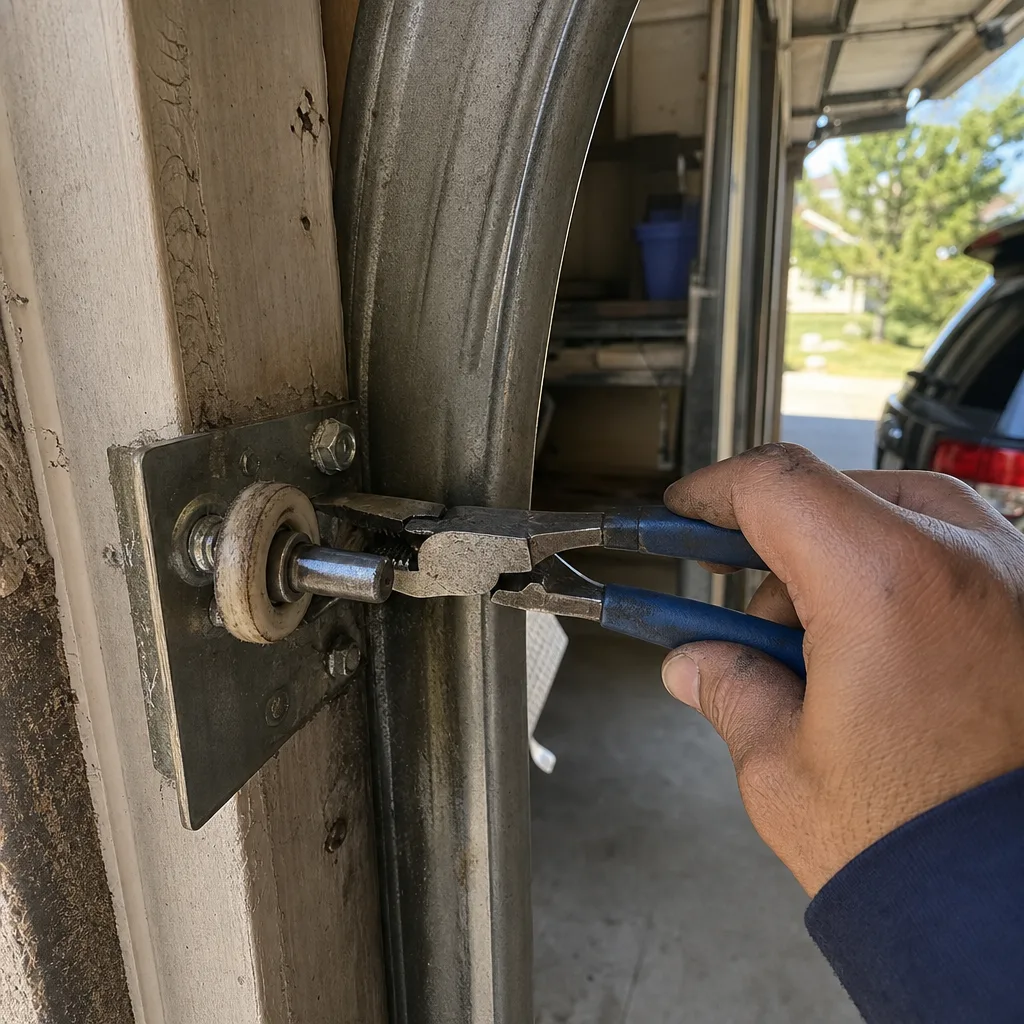
Noise gets attention, but speed change is more predictive. A garage door that gradually slows is telling you the opener is working harder against increasing resistance. That resistance comes from a component degrading, and measuring the change gives you objective data.
How to Time Your Door
With a stopwatch, time a complete cycle from fully closed to fully open. Do this monthly. A standard residential door with a ½-horsepower opener should complete this in 10-14 seconds. (Larger doors with ¾-horsepower openers may be slightly faster.)
Document your baseline when the door is operating well. Then watch for:
- 15-18 seconds: The opener is compensating for resistance. Common causes: dry rollers, track misalignment, or a weakening spring forcing the motor to do more work.
- 19-25 seconds: Significant resistance. Often a failing spring, bent track section, or opener drive gear stripping. Schedule service within two weeks.
- Inconsistent speed: The door slows mid-cycle or speeds up unexpectedly. This points to a logic board or limit switch issue, or a binding spot in the track.
Why Speed Beats Noise
A door can squeal from dry hinges for years without failing. A door that slows from 12 seconds to 20 seconds is approaching a breakdown, because the opener isn’t designed to run at overload continuously. The motor overheats, the drive gear strips, or the safety system triggers a reversal. In Aurora’s summer heat, an overloaded opener fails faster because the motor can’t dissipate heat.
We’ve timed doors in Murphy Creek that took 22 seconds to open - the homeowner had adapted to the change over months. The torsion spring was two coils from failure, and the opener’s drive gear was stripped to half its teeth. Catching the speed change at 15 seconds would have saved the opener; see more guides & resources for additional maintenance tips.
Opener Warning Signs: Motor, Logic Board, and Safety Systems
Garage door openers fail in characteristic ways, and the symptoms map to specific components. Here’s what we’ve documented across LiftMaster, Chamberlain, Genie, and other major brands in Aurora homes.
Motor and Drive Train
Overheating shutdown: The opener stops mid-cycle, waits 10-15 minutes, then works again. This is thermal protection engaging because the motor is working too hard. Causes: failing spring, binding door, or stripped drive gear increasing friction. The motor itself is rarely the problem - it’s protecting itself from a mechanical issue.
Running but door doesn’t move: The motor hums or the chain/belt moves, but the door stays put. On chain-drive openers, this usually means the trolley carriage has stripped internally or the emergency release cord was pulled and not re-engaged. On belt-drive units, the belt may have stripped teeth where it connects to the trolley.
Logic Board and Electronics
Intermittent operation: The opener works from the wall button but not the remote, or vice versa, or it works only at certain times of day. This pattern usually indicates a failing logic board, the circuit board that processes all signals. Power fluctuations in Aurora - common during spring thunderstorms along the Palmer Divide - accelerate logic board failure. A surge protector on the opener outlet helps but doesn’t eliminate the risk.
Random reversal: The door starts down, then reverses for no apparent reason. Homeowners blame the safety sensors, but the cause is often the force setting. Openers have a down-force limit; if the door encounters resistance exceeding that limit, it reverses as a safety measure. A warped bottom seal, debris in the track, or a binding roller can trigger this. In Aurora’s cold months, the rubber bottom seal stiffens and creates more friction, especially on north-facing doors that don’t get sun.
Safety Sensors
The photo-eye sensors at track bottom are the most misdiagnosed component. When the door won’t close and the opener light flashes, homeowners assume sensor failure. In our experience, actual sensor failure is less common than:
- Alignment drift: Vibration loosens the brackets, and one sensor points slightly away from the other. The LED indicators show this - one green, one red or off.
- Obstruction: Spider webs, leaves, or snow block the beam. Aurora’s cottonwood season in late May through June fills garages with seed fluff that coats sensor lenses.
- Wiring damage: The low-voltage wire between sensor and opener gets pinched by storage items or chewed by rodents. We’ve found this in garage workshops where the wire runs along the wall at floor level.
True sensor failure - where both LEDs are correct but the door still won’t close - is rare. Before replacing sensors, check alignment and clean the lenses.
Track, Roller, and Hardware Red Flags
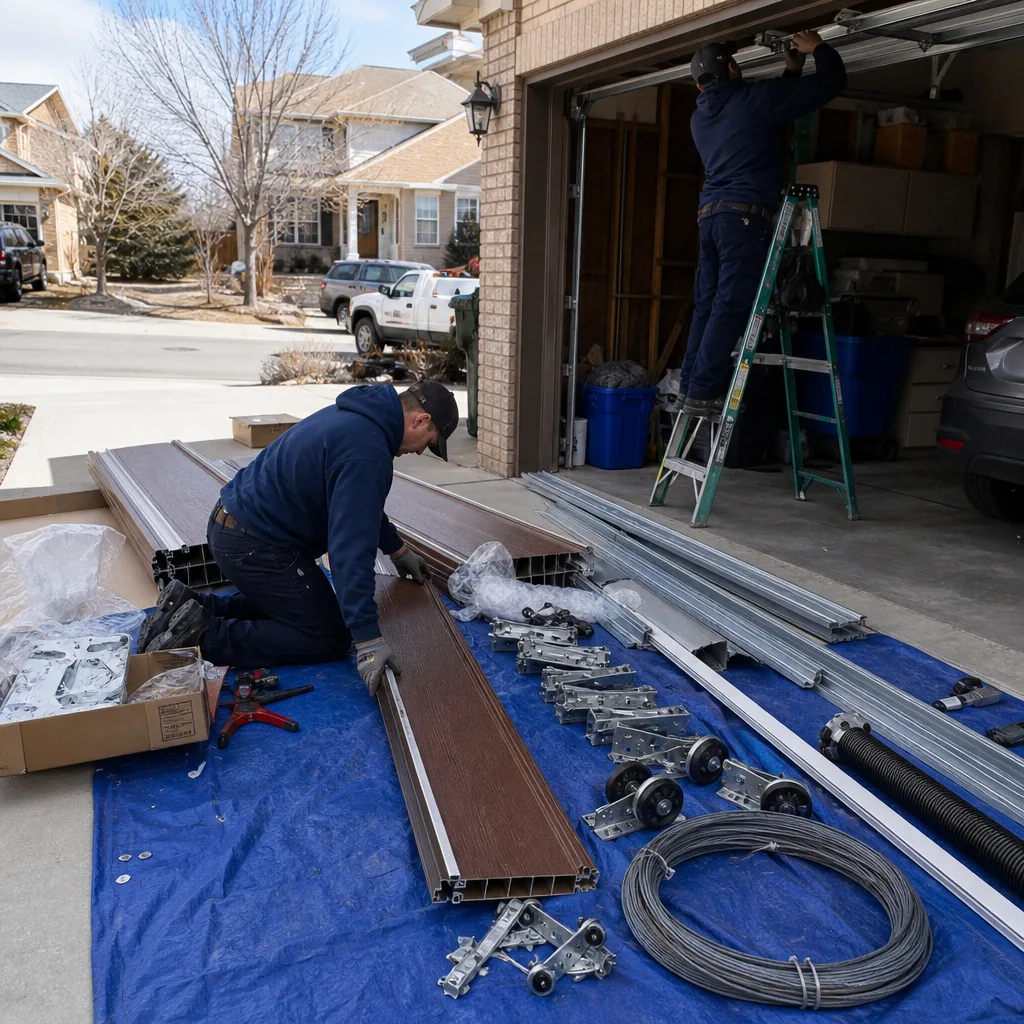
The track and roller system guides the door and carries its weight during travel. Problems here create noise, resistance, and eventually jamming.
Track Misalignment
Vertical tracks must be plumb and parallel; horizontal tracks must slope slightly down toward the back of the garage. Misalignment shows as:
- Rub marks on the track interior: The door edge or roller is contacting the track wall. Look for polished strips or paint wear where the door has been rubbing.
- Gaps between roller and track: A roller that sits away from the track wall on one side is being pulled by misalignment. This accelerates bearing wear.
- Track bolts loosening from the jamb: In Aurora’s expansive clay soils, foundation movement shifts garage frames and loosens track fasteners. We’ve resecured tracks in newer subdivisions like Tollgate Crossing where settling is still active.
Roller Condition
Standard steel rollers with unsealed bearings last 5-7 years in Aurora’s climate. Nylon rollers with sealed bearings last 10-15 years. Inspect rollers with the door closed:
- Look for wobble: grasp the roller stem (if safely reachable) and check for play. Excessive wobble means bearing failure.
- Spin test: with the opener disengaged and door partially open, the roller should spin freely. Grinding or roughness means replacement.
- Check for flat spots: steel rollers can develop flat areas from sliding instead of rolling.
Hardware Loosening
The vibration of daily operation loosens bolts and nuts. Check quarterly:
- Hinges: bolts connecting door sections
- Top fixture and bottom bracket: where cables and opener attach
- Track brackets: where horizontal meets vertical track
- Header bracket: where the opener rail attaches to the wall above the door
A loose header bracket is particularly dangerous - it’s the point where opener force meets the door, and failure here can drop the rail onto the vehicle or door.
Warning Signs by Urgency: Monitor, Schedule, or Call Now
Not every warning sign demands immediate service. Categorizing by risk helps you decide without urgency pressure.
Monitor for 30 Days
- Squealing hinges or rollers: Lubricate with silicone-based spray and re-evaluate. If noise persists after lubrication, schedule maintenance.
- Minor speed increase (1-2 seconds): Time the cycle monthly. If stable, continue monitoring. If worsening, schedule.
- Cosmetic rust on track surface: Clean and paint. Not structural unless pitting is deep.
Schedule Within Two Weeks
- Visible torsion spring gap or coil deformation: Spring failure is likely within weeks. Avoid operating the door unnecessarily.
- Door slowing by 4+ seconds: Mechanical resistance is increasing. The opener is compensating and will fail if not addressed.
- Intermittent remote or wall button operation: Logic board failure is progressive. You may get stuck with a door that won’t open.
- Frayed cable: No predictable failure timeline. Replace before it snaps.
Same-Week or Same-Day Service
- Door crooked in tracks or cable off drum: Operating a crooked door damages tracks and can cause cable snap or door fall.
- Spring break: Door is unbalanced and dangerous to operate. The opener will strain and may fail.
- Opener running but door not moving: Trolley or drive gear failure. The door may be manually operable but is unsecured.
- Loud pop followed by door dropping: Spring or cable failure. Do not operate.
How Aurora’s Climate Accelerates Specific Failures
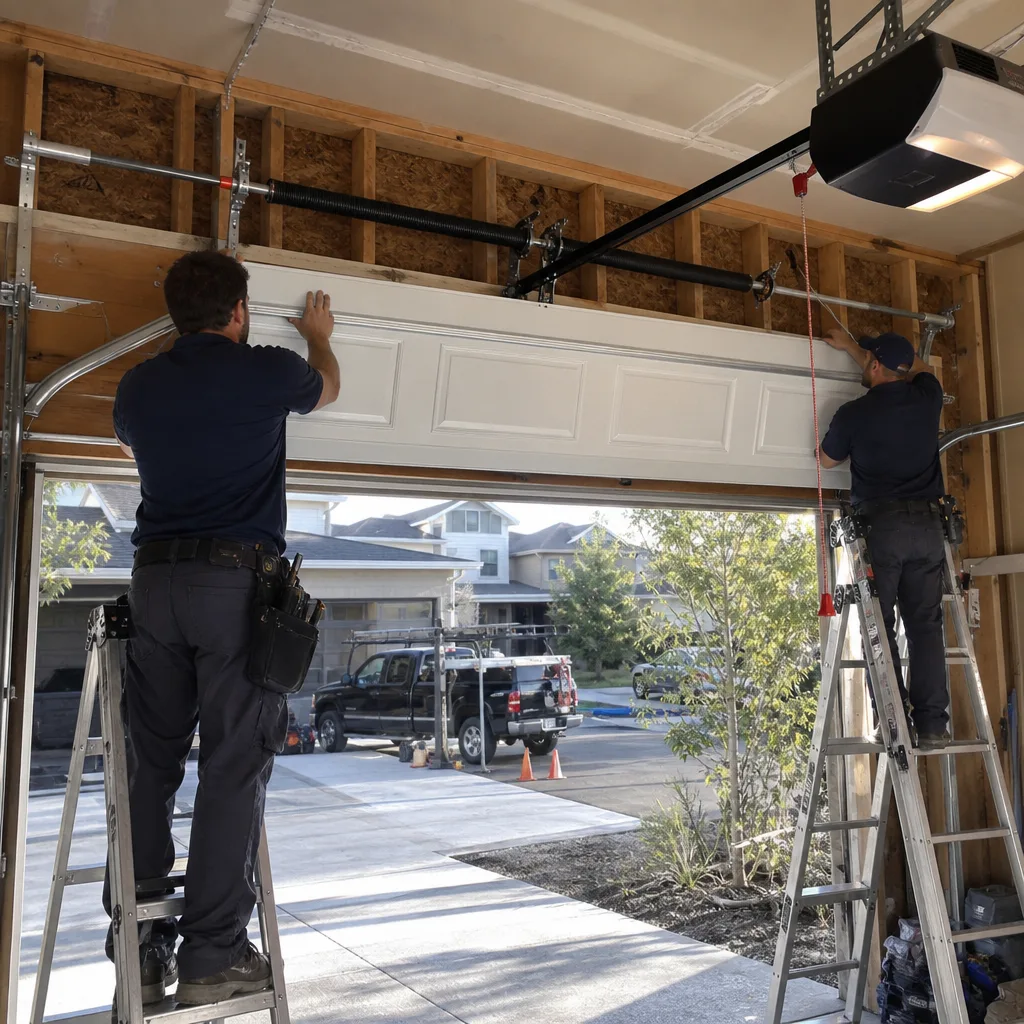
Aurora’s elevation, temperature range, and wind patterns create conditions that shorten component life in predictable ways. Understanding this - and following a seasonal garage door care routine for Aurora - helps you anticipate problems rather than react to them.
Cold and Dry Winters
From November through March, overnight lows regularly drop below 20°F. This affects:
- Bottom seals: Rubber compounds stiffen and lose flexibility. A seal that compressed easily at 70°F becomes rigid at 20°F, creating friction the opener interprets as an obstruction. This causes random reversals that homeowners misdiagnose as sensor problems.
- Lubricants: Standard grease thickens in cold. Rollers and hinges that were quiet in summer grind in winter. We use low-temperature synthetic lubricants on winter service calls in Aurora.
- Springs: Cold makes steel more brittle. A spring with micro-cracks from fatigue is more likely to break on the first cold snap. January and February are our peak spring-break months.
Intense Sun and UV
Aurora receives more annual sunshine than Miami. South- and west-facing garage doors absorb significant heat:
- Weatherstripping: UV degrades rubber and vinyl faster than in cloudier climates. Bottom seals and jamb seals crack and lose compression.
- Paint and finish: Steel door surfaces reach 140°F+ in summer sun, accelerating paint chalking and metal fatigue at stress points.
Wind and Dust
Aurora’s position on the High Plains exposes homes to sustained winds, especially in eastern subdivisions like Aurora Highlands and Saddle Rock. Wind-blown dust and sand accelerate wear on:
- Roller bearings: Grit infiltrates unsealed bearings and acts as grinding compound.
- Track surfaces: Dust accumulation mixes with lubricant to form abrasive paste.
- Logic boards: Static electricity from dry, windy conditions increases risk of electronic damage.
Freeze-Thaw Cycling
The daily temperature swing from 20°F overnight to 50°F afternoon creates expansion-contraction stress on:
- Track fasteners: Metal expands and contracts against wood jambs, loosening lag screws.
- Concrete and foundations: Soil movement shifts garage door frames, throwing tracks out of alignment.
- Spring wire: Each cycle loads and unloads the spring; temperature variation adds thermal stress to mechanical stress.
Common Mistakes to Avoid
- Assuming the sensor is broken when the door reverses. In Aurora’s cold months, check the bottom seal first. A $60 seal replacement fixes what homeowners often spend $150 diagnosing as sensor failure.
- Ignoring a slowing door because “it’s always been a little slow.” Time it. A 12-second door that takes 18 seconds has a 50% performance degradation. That’s not character; it’s a countdown.
- Attempting torsion spring work after watching a video. The winding cone holds enough energy to cause serious injury or death. This is not a skill-acquisition project. Our technicians carry specialized tools and training for this exact reason.
- Replacing the opener when the spring is failing. A weak spring makes the opener work harder, causing symptoms that look like motor failure. Replacing the opener without checking spring tension wastes $400-$700.
- Using WD-40 on rollers and hinges. WD-40 is a solvent and light penetrant, not a lubricant. It displaces grease and attracts dust. Use silicone-based spray or lithium grease formulated for garage door components.
- Waiting for the spring to break. A broken spring can damage the top door section, strip the opener drive gear, or trap your vehicle. Scheduled replacement costs the same as emergency replacement, without the collateral damage.
When to Call a Professional
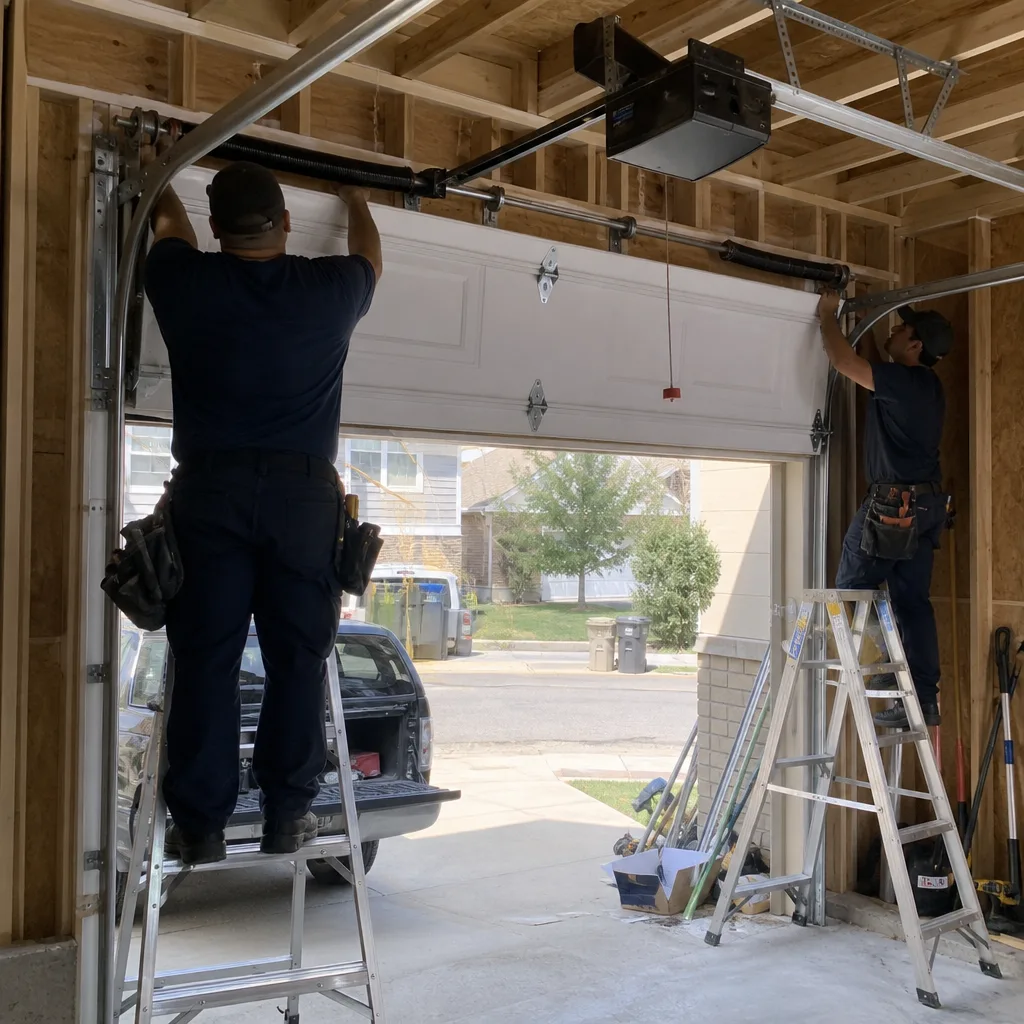
Call when you observe any same-week or same-day warning sign from the urgency timeline above. Call when you’re unsure whether a symptom indicates cable or spring failure. Call when your timed cycle shows consistent slowing. And call when you’ve received an estimate that doesn’t specify the component being replaced, the wire diameter and cycle rating of a proposed spring, or the flat price before work starts.
Servo Garage Doors Aurora offers free estimates in Aurora - call (720) 477-6050. Every visit includes a documented photo record of what we find and what we do, delivered to you before we leave. Our written price and scope come before any work starts, per Clause 1 of The Haven Standard. If you’ve received a written estimate from another company, we’ll provide a free second opinion - no coupon required.
Frequently Asked Questions
Torsion spring replacement in Aurora typically costs $180-$340, depending on door weight, spring wire diameter, and cycle rating. Extension spring systems run slightly less. We quote a flat, written price before any work starts - no exceptions. Call (720) 477-6050 for an exact quote; estimates are free.
Often, yes. Check that both sensor LEDs are lit (one green, one amber on most models), clean the lenses with a soft cloth, and verify nothing blocks the beam. If both LEDs are correct and the door still reverses, the cause is likely force-limit settings or mechanical resistance, not the sensors. For safety system work beyond cleaning and alignment, we recommend a trained technician.
Look for a visible gap between coils, rust streaking or pitting, or coil deformation (ovals or kinks where circles should be). A single loud pop during operation means the spring system is compromised. Time your door’s cycle - significant slowing often precedes spring failure by weeks. These signs are observable from ground level without touching the spring.
In Aurora’s cold months, the most common cause is a stiffened bottom seal creating friction the opener’s force limit reads as an obstruction. The seal warms and flexes with use, so the problem may seem intermittent. Sensor misalignment is possible but less likely if the issue appeared suddenly when temperatures dropped. A seal replacement typically runs $60-$90.
No. Our flat, written price and written scope are delivered before any work starts - Clause 1 of The Haven Standard. The technician diagnoses, documents with photographs, and quotes. You approve the price. Then work begins. If we find additional issues during service, we stop and quote separately. Nothing happens without your written approval.
A quality opener (LiftMaster, Chamberlain, Genie) typically lasts 10-15 years with proper maintenance. Aurora’s climate stresses electronics more than milder regions - power fluctuations from storms and temperature extremes shorten logic board life. An opener that’s slowing the door or overheating is often protecting itself from a mechanical issue (usually spring or track) that will outlast the opener if not fixed.
The Bottom Line
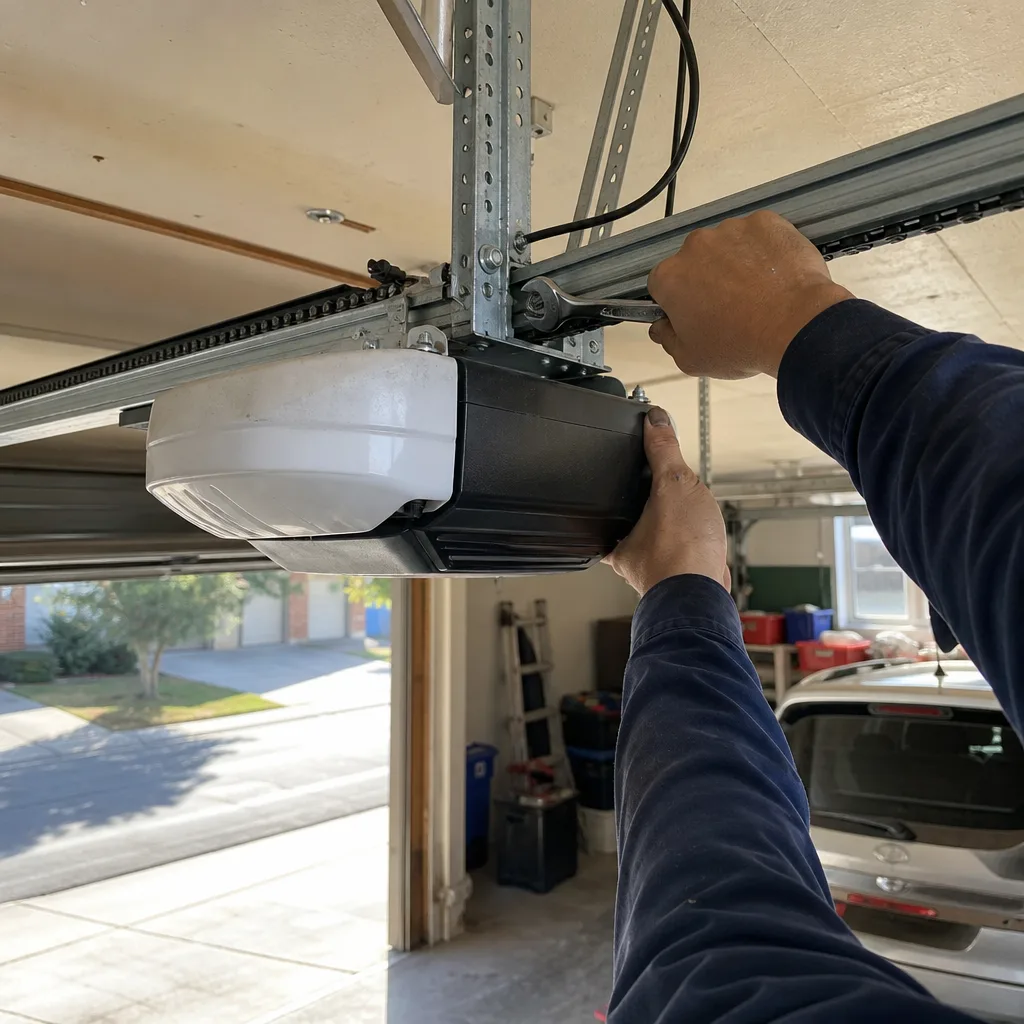
Garage door warning signs are most useful when you map the symptom to the actual component. Noise tells you where to look; speed change tells you how urgent it is; visual inspection tells you whether you’re monitoring, scheduling, or calling now. In Aurora’s climate, cold-stiffened seals masquerade as sensor failures, freeze-thaw cycling loosens hardware faster, and brittle winter steel breaks springs with less warning. Time your door’s cycle, inspect springs monthly from ground level, and know that a slowing door is more predictive than a noisy one. Documentation beats guesswork - which is why every Servo visit includes a photo record of what we found and what we fixed, and why the price is always written before the work starts.
Written by Marcus Deller, Owner at Servo Garage Doors Aurora, serving Aurora since 2015.