
Last updated September 22, 2026
Full 25-point door and opener safety check with every visit - springs, cables, rollers, tracks, and your LiftMaster or Chamberlain opener included
You get a price before we start. It does not change when the truck arrives.
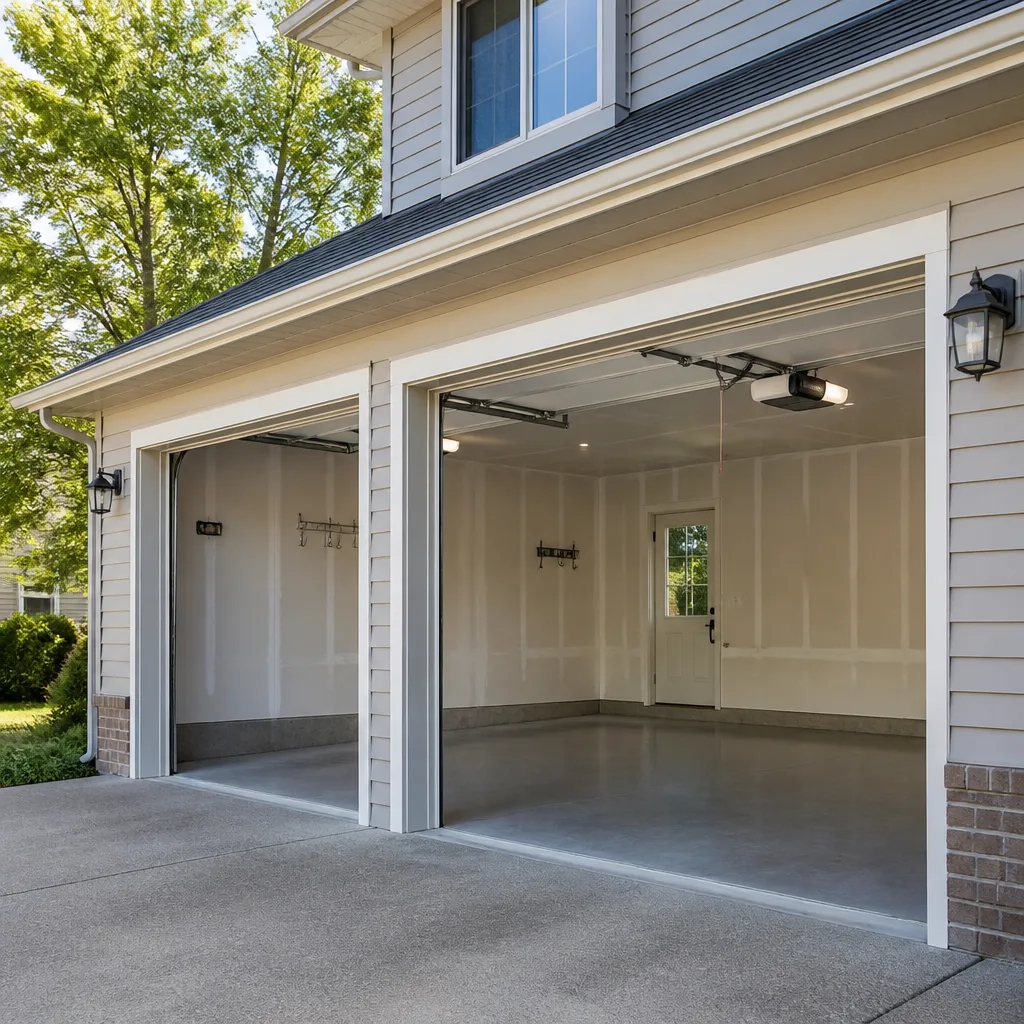
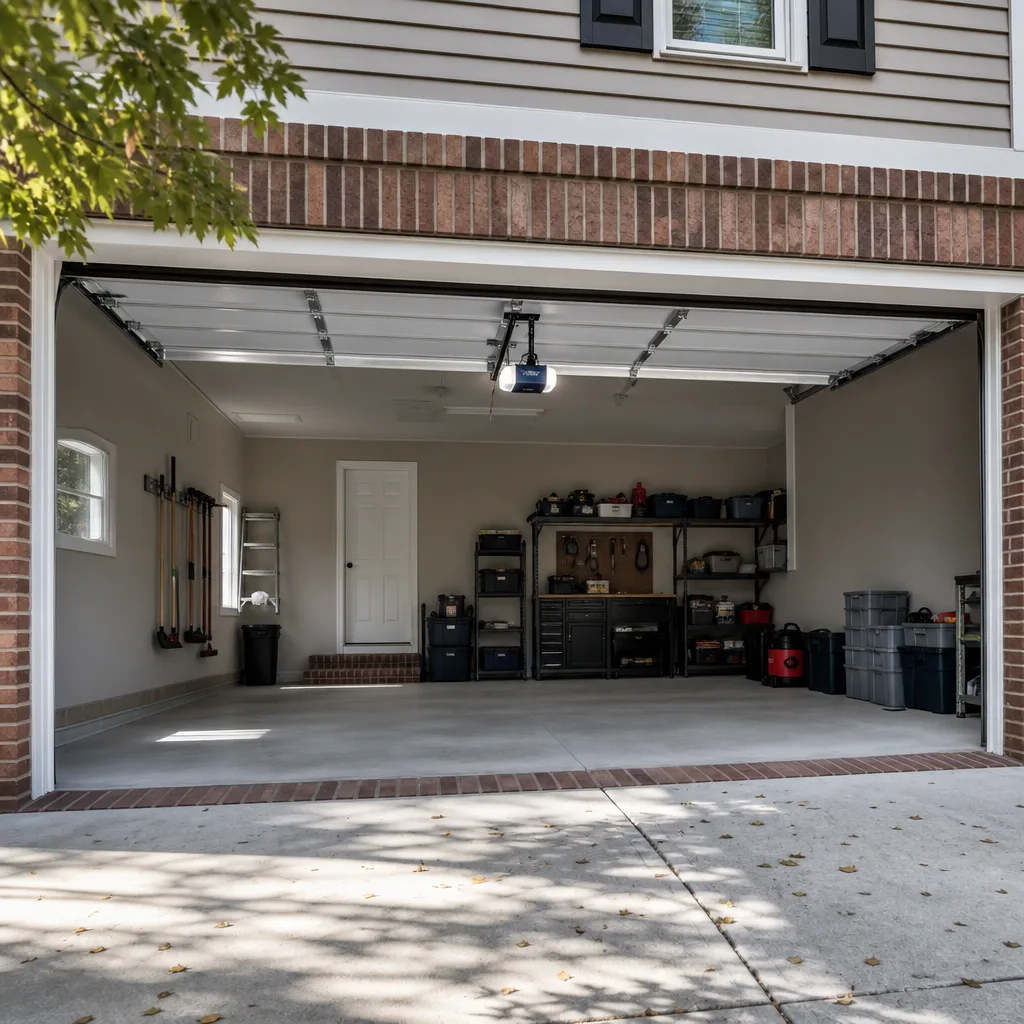
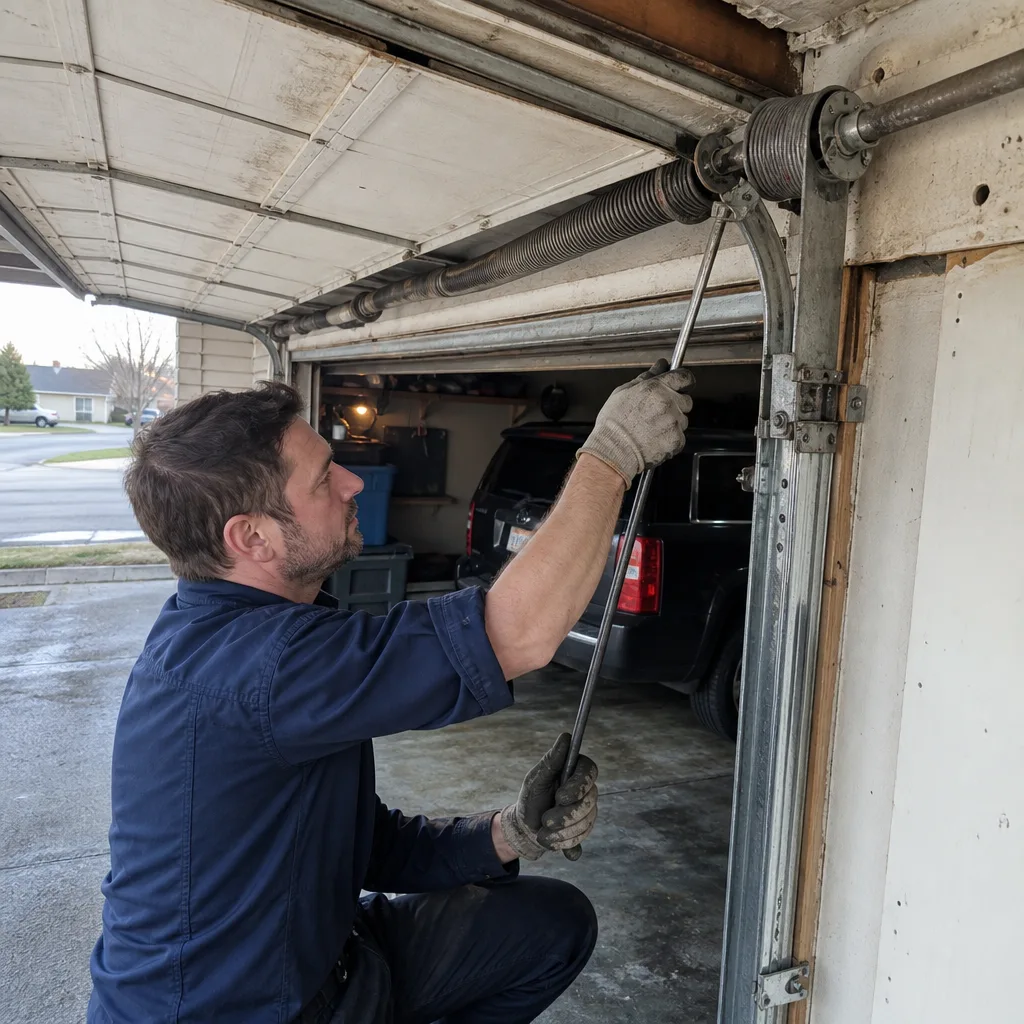 Before
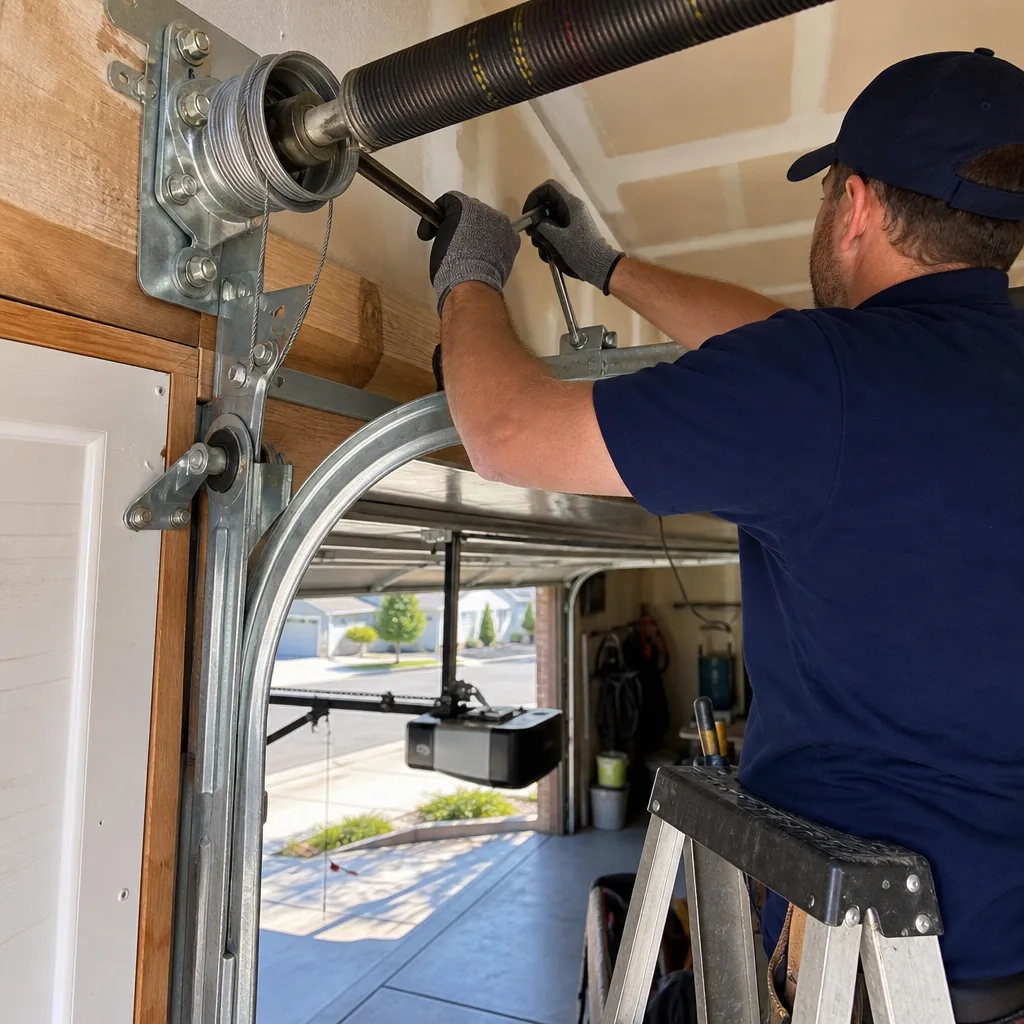 After
After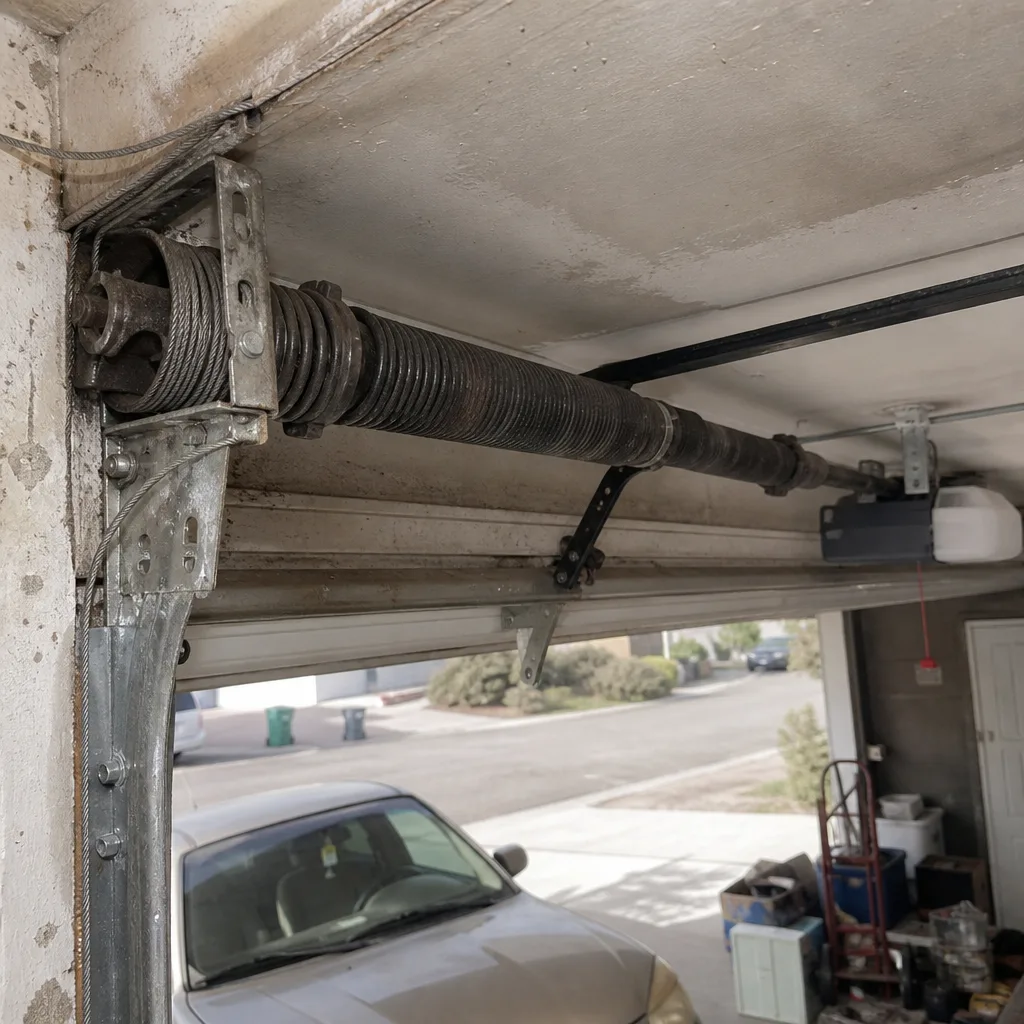 Before
 After
After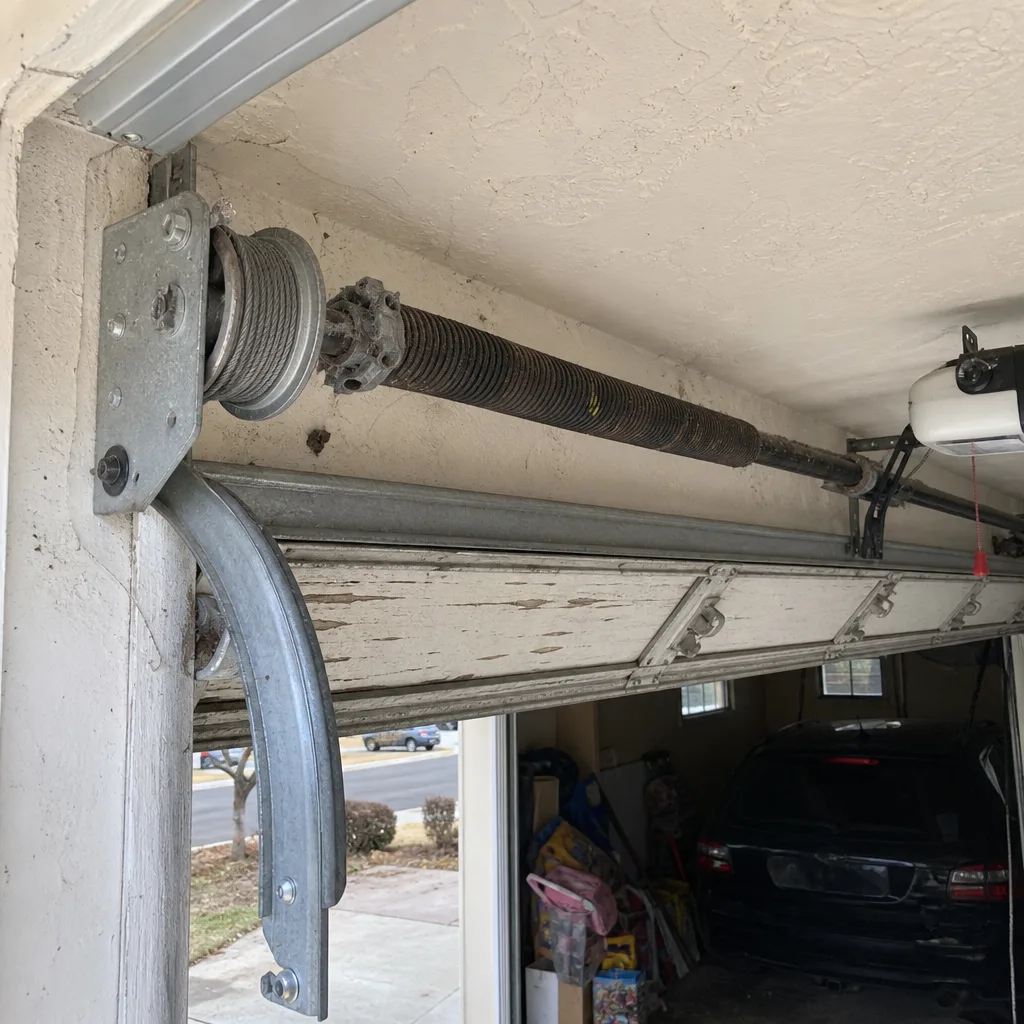 Before
 After
AfterSeasonal Garage Door Care for Aurora: Year-Round Homeowner’s Guide
Aurora’s March and April are when torsion spring failures spike - not January. The mechanism is thermal fatigue: springs contract through winter and then cycle rapidly as temperatures swing 40°F between morning and afternoon during the Front Range’s shoulder season. Most seasonal maintenance guides treat all four quarters equally, but that’s not how garage doors actually age in Colorado. In The Complete Guide to Garage Door in Aurora, you’ll learn why winter and early spring do the majority of mechanical damage, when to schedule each maintenance task for maximum protection, and how Aurora’s specific climate patterns - from monsoon humidity to clay-soil frost heave - affect the components on your door.
Quick Answer
Garage door care in Aurora should follow an uneven schedule: inspect torsion springs and weatherstripping in late February before thermal cycling begins, address rust-prone hardware during July-August monsoon season, and replace bottom seals only when temperatures stay above 50°F for proper silicone bonding. Most mechanical failures occur during March-April temperature swings, not mid-winter cold.
Table of Contents
- Why Spring Failures Spike in March and April, Not January
- Late February Inspection: The Most Overlooked Maintenance Window
- Monsoon Season Impact: July-August Humidity and Hardware Rust
- Fall Weatherstrip Replacement: Why Temperature Matters for the Bond
- Winter Concrete Slab Behavior: Frost Heave and Bottom Seal Gaps
- Component Lifespan in Aurora’s Climate Cycles
- A Realistic Year-Round Maintenance Schedule
- Common Mistakes to Avoid
- When to Call a Professional
- Frequently Asked Questions
BeforeAfterWhy Spring Failures Spike in March and April, Not January
Counterintuitive but well-documented in our service records: the busiest weeks for torsion spring replacements in Aurora run from the second week of March through mid-April. Not December. Not January. The reason is thermal fatigue, not absolute cold.
Here’s the mechanism. A torsion spring is a steel coil under extreme tension - typically 10,000 to 15,000 cycles of expected life. Through winter, the metal contracts and the spring operates at slightly higher baseline tension. The door still opens. The homeowner notices nothing. But in March and April, Aurora’s Front Range location produces rapid temperature swings: 28°F at 6 a.m., 68°F by 2 p.m., then back below freezing overnight. The spring expands and contracts through this range daily. Each thermal cycle adds micro-stress to the steel. After a full winter of contraction followed by 30 to 50 rapid expansion-contraction cycles in spring, the metal fatigues at the coil body. The break typically occurs at the stationary cone or the winding cone, where stress concentrates.
We’ve photographed this pattern repeatedly. The fracture surface shows beach marks - the telltale signature of fatigue failure, not single-event overload. A spring that snaps in January usually shows brittle fracture from a manufacturing defect or prior damage. A spring that fails in March or April shows the gradual wear pattern of thermal cycling. This distinction matters because it changes when you inspect.
The inspection window is late February, before the cycling begins. At that point, the spring has endured winter contraction but not yet accumulated spring fatigue. We measure free length, count active coils, and check for coil binding or gaps that indicate set loss. If the spring measures more than 3% below its specified free length, replacement before March is the prudent course. The cost of scheduled replacement in February: $180-$340 for a standard 2-car residential torsion spring pair in Aurora, as detailed in our Garage Door Cost Breakdown: The Aurora Homeowner’s Reference for 2026. The cost of an emergency call on a door that won’t open in March: the same spring price plus after-hours labor, plus the inconvenience of a car trapped inside.
The climate pattern is specific to Aurora’s elevation and geography. At 5,400 feet with dry winter air and intense spring insolation, temperature swings exceed those in Denver proper or in lower-elevation plains towns. Homes in Tollgate Overlook, Saddle Rock Ridge, and other east Aurora neighborhoods at slightly higher elevation see this effect amplified.
Late February Inspection: The Most Overlooked Maintenance Window
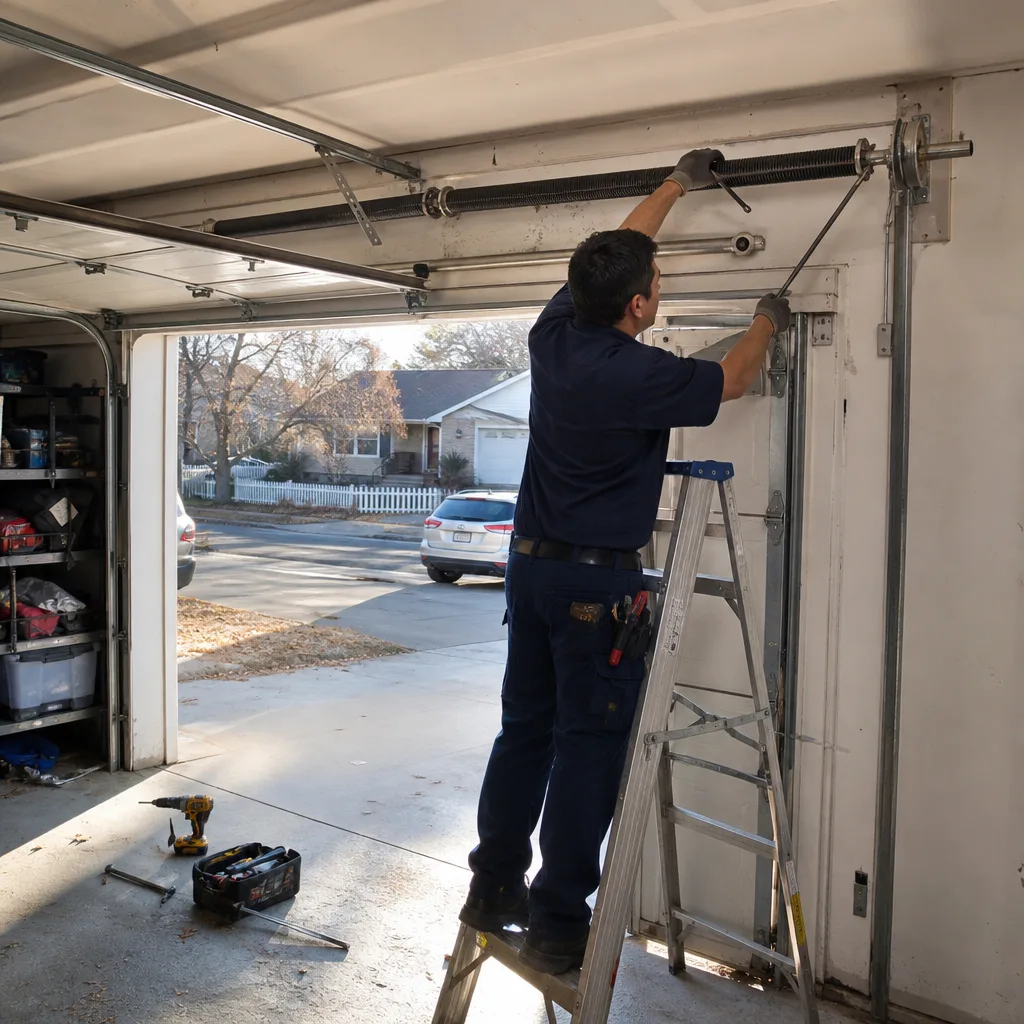
Most garage door maintenance guides recommend a “fall tune-up.” For Aurora, that’s backwards. Fall preparation matters for weatherstripping and lubrication, but the critical mechanical inspection belongs in late February. Here’s what that inspection should cover, and why the timing matters.
- Torsion spring tension and free length measurement. Using a winding bar set and caliper, measure the wire diameter (typically 0.207 to 0.283 inch for residential doors) and count active coils. Compare to the manufacturer’s specification chart. A spring that has lost set - permanent deformation from cycling - will measure short and feel “soft” at the opener. This is the thermal-fatigue precursor we discussed above.
- Cable drum inspection and set-screw torque. The cable drums at each end of the torsion tube anchor the lift cables. In Aurora’s dry winter air, set screws can loosen from thermal contraction of the metal shaft. Check torque with a proper hex key; do not overtighten, as this can distort the drum hub.
- Bottom bracket and roller condition. The bottom brackets carry the full door weight through the lift cables. Inspect for cracks in the stamped steel, especially at the cable anchor point. Rollers should spin freely; nylon rollers degrade from UV exposure even in winter, and steel rollers accumulate dry-lube residue that thickens in cold.
- Track alignment and fastener torque. Vertical tracks must be plumb within 1/4 inch over the full door height. Horizontal tracks must slope slightly toward the rear of the garage - about 1/4 inch per 2 feet - so the door doesn’t roll forward when open. Fastener torque checks matter because Aurora’s clay soils transmit freeze-thaw movement to the slab, then to the track mounting, loosening lag bolts over time.
- Opener force and limit settings. The opener’s force adjustment compensates for spring weakening. If the spring has lost tension, the opener works harder. Check that the door reverses properly on a 2×4 board test, and that the limit switches - the small switches that tell the opener when to stop at full open and full close - are set so the door seals without crushing the bottom seal.
The lubricant choice for this inspection matters. We use a lithium-based grease on the torsion spring and a silicone spray on the rollers, hinges, and track. Avoid WD-40 or general-purpose penetrating oils; they attract dust and gum up in cold. In Aurora’s dry climate, lubrication lasts longer than in humid regions, but the temperature swings in March accelerate wear on unlubricated surfaces.
This inspection takes 45-60 minutes for a trained technician with proper tools. Homeowners can perform visual checks - look for rust, listen for grinding, watch for uneven door movement - but spring tension measurement and cable drum work require specialized equipment and carry genuine injury risk from stored energy in the torsion system. Garage door repair in Aurora should include this inspection as a scheduled service, not an emergency response.
Monsoon Season Impact: July-August Humidity and Hardware Rust
Aurora’s monsoon season runs roughly mid-July through August, with moisture pulsing up from the Gulf of California on southeasterly flow. Annual precipitation averages 18 inches, but nearly 40% falls in these two months. Relative humidity spikes from winter lows of 15-25% to summer peaks of 60% or higher during active monsoon periods.
For garage door hardware, this humidity matters more than total rainfall. Here’s why: the hardware - track brackets, hinges, rollers, and fasteners - is typically zinc-plated or galvanized steel. The plating provides sacrificial protection. In dry conditions, this lasts years. In sustained humidity above 55%, the electrochemical corrosion rate accelerates. We’ve documented rust bloom on uncoated track hardware in Aurora homes after just two monsoon seasons, where the same hardware in comparable dry climates shows no corrosion after five years.
The specific vulnerability is the track mounting hardware. Vertical tracks attach to jamb brackets, which attach to wood framing with lag screws. The lag screws are often the weakest point: standard zinc plating, direct exposure to garage air, and the thermal mass of the steel track promoting condensation on humid mornings. Once rust begins at the screw head, it progresses into the wood fiber, loosening the attachment. A loose track allows roller bind, which stresses the opener and the door panels.
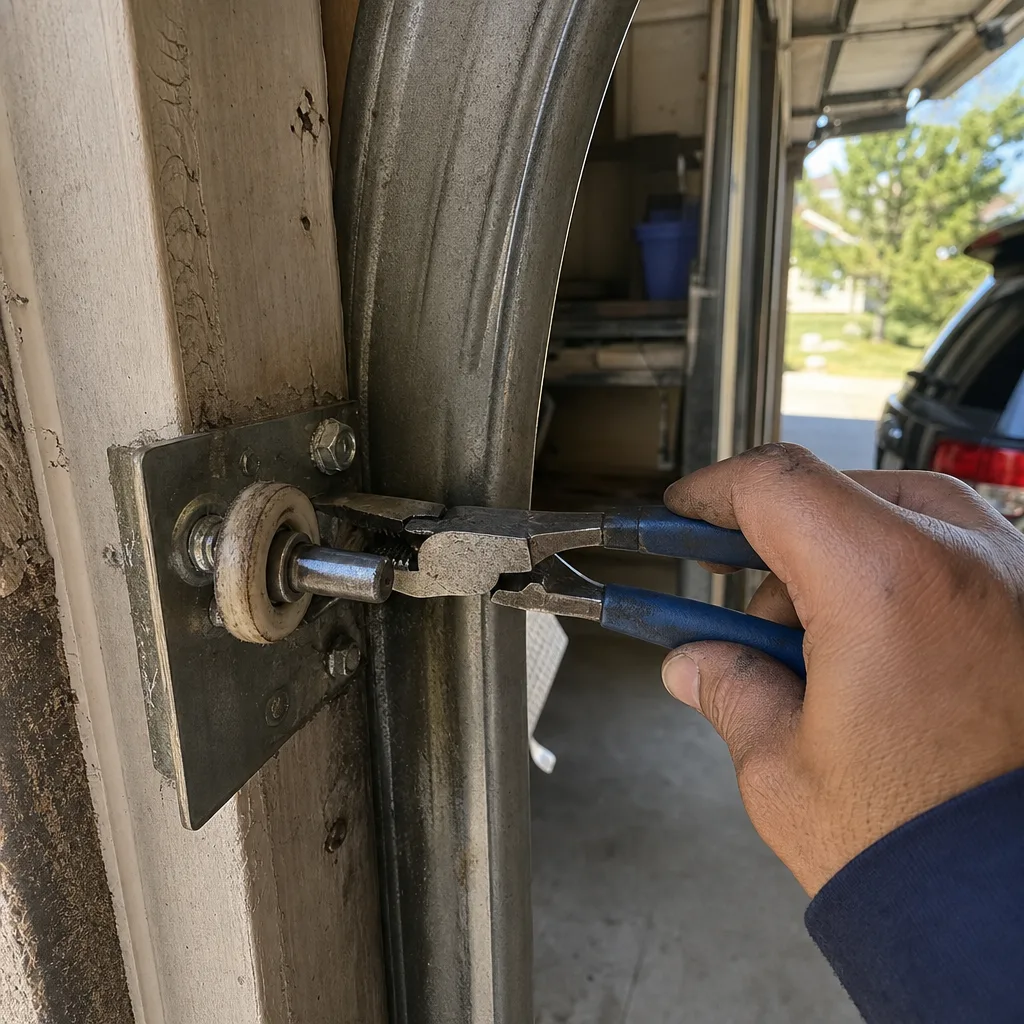
The product spec to look for: hardware with yellow-zinc dichromate plating or, better, stainless steel for critical fasteners. When we replace track hardware in Aurora, we specify 410 stainless lag screws for the jamb brackets. The cost difference is modest - perhaps $15-$25 in hardware for a standard door - but the service life in monsoon conditions triples. For hinges and rollers, we specify nylon rollers with sealed bearings and zinc-plated hinges with a supplementary light oil film applied during the July inspection.
The inspection itself is straightforward. In mid-July, before the peak monsoon pulse, examine all hardware for orange rust bloom, especially at screw heads and bracket welds. Operate the door and listen for new grinding or squealing - humidity can wash out residual lubricant, exposing metal-to-metal contact. Re-lubricate with silicone spray, and replace any fastener showing more than surface discoloration.
Homes in older Aurora neighborhoods - Original Aurora, Hoffman Heights, areas with garages built before 1990 - often have original hardware with minimal plating. These are priority candidates for preemptive replacement. Newer construction in Southshore, Reunion, or the eastern developments typically has better factory hardware, but the monsoon humidity still warrants annual inspection.
Fall Weatherstrip Replacement: Why Temperature Matters for the Bond
The bottom seal and perimeter weatherstripping on a garage door serve two functions: they block wind, dust, and precipitation, and they create a thermal barrier between conditioned garage space and outside air. In Aurora, where winter heating costs matter and rodent intrusion is a documented problem, effective weatherstripping pays for itself. But timing the replacement wrong wastes the investment.
Silicone-based bottom seals - the U-shaped retainer with a flexible bulb or blade - bond to the concrete threshold through a combination of compression and, in some installations, a supplementary adhesive bead. The silicone compound remains flexible to approximately -40°F, which is well below Aurora’s record lows. But the installation temperature determines the initial set. Below 50°F, silicone cures slowly and may not achieve full adhesion before thermal cycling begins. A seal installed in November, when overnight temperatures drop to the 20s, can detach at one corner by January, creating the gap that admits mice, voles, and cold air.
The correct window is September through mid-October, when Aurora’s daytime temperatures reliably exceed 60°F and overnight lows stay above 45°F. At these temperatures, silicone achieves handling strength in 24 hours and full cure in 72 hours. The seal compresses against the threshold under its own spring tension, and the adhesive bead (if used) sets before cold weather arrives.
The product specification matters too. For Aurora’s sun exposure - intense UV at 5,400 feet - we specify EPDM rubber or high-grade silicone with UV stabilizers, not PVC. PVC becomes brittle at 20°F and cracks at the fold points. EPDM remains flexible to -40°F and resists ozone cracking. The cost difference is $8-$15 for a standard 16-foot seal, negligible against the labor of replacement.
Perimeter weatherstripping - the vinyl or rubber flap that seals the door sides and top - should be inspected at the same time. Look for compression set (the flap stays flattened after the door opens), tearing at the mounting rail, and UV crazing. Replacement is simple: the flap slides into an aluminum or PVC retainer channel. But again, install in warm weather so the vinyl is flexible and seats properly in the channel.
A specific Aurora consideration: the combination of intense fall sun and rapid temperature drops in October can “shock” weatherstripping installed too late in the season. We’ve replaced seals in Stapleton-area homes where November installation led to corner lift by December, with the homeowner assuming a product defect rather than a timing error. The defect was in the scheduling, not the seal.
Winter Concrete Slab Behavior: Frost Heave and Bottom Seal Gaps
Aurora sits on expansive clay soils - the Denver Formation clays and alluvial deposits that underlie much of the Colorado Piedmont. These soils expand when wet and contract when dry, but the winter behavior is more specific: frost heave in the upper 12-24 inches of soil lifts the garage slab at its perimeter, while the center (deeper, more thermally stable) settles relatively. The result is a slight dish or tilt to the slab, often most pronounced at the overhead door threshold.
The gap this creates is typically 1/8 to 3/8 inch - small enough to overlook, large enough to matter. Mice need 1/4 inch. Voles, common in Aurora’s open spaces, exploit gaps at the door corner. Cold air infiltration through a 3/8-inch gap along a 16-foot door equals roughly a 4-square-inch hole in the wall - not trivial for heating load.
The correct fix is not simply replacing the seal with a thicker one. The fix is adjusting the door’s bottom bar and, if necessary, shimming the threshold plate to restore even contact. Here’s the sequence:
- Measure the gap. Close the door on a bright day and look for light penetration. Mark the gap locations with masking tape. Typical pattern: center contacts, corners lift.
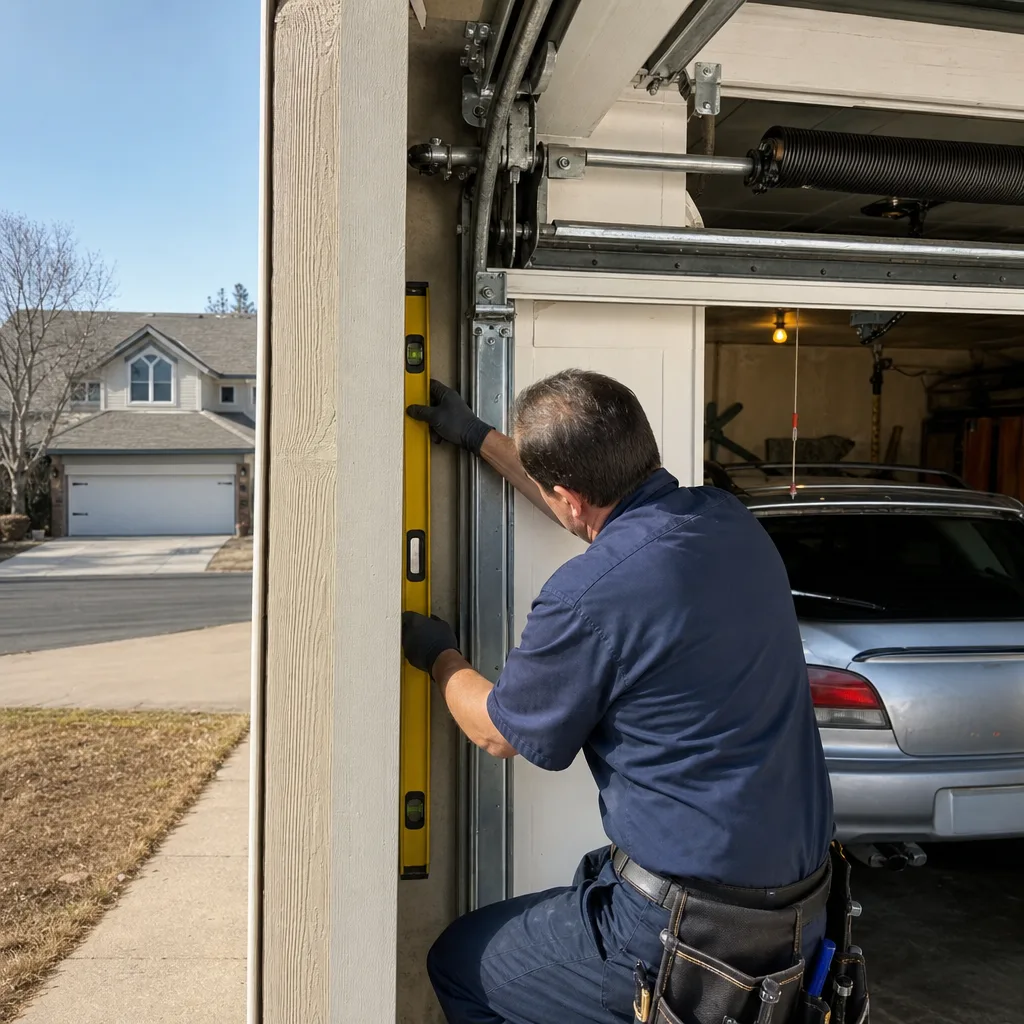
- Check door level. Use a 4-foot level on the bottom bar. If the bar is straight but the slab is dished, the fix is threshold adjustment. If the bar is bowed (common on older wood doors or thin-gauge steel), the bar itself needs replacement or reinforcement.
- Adjust or shim the threshold. For minor gaps, a PVC threshold cap with built-in seal can bridge 1/4 inch. For larger gaps, remove the aluminum threshold plate, add a tapered shim of pressure-treated lumber or composite, and reinstall. The shim must be sealed to the concrete to prevent moisture intrusion and further frost damage.
- Verify seal compression. Close the door on a strip of paper at multiple points. The paper should drag slightly; if it pulls free easily, compression is inadequate.
This work is best done in late fall, after the soil has begun to cool and the maximum heave is established, but before hard freeze makes concrete work difficult. In Aurora, that’s typically late October to mid-November. Attempting this in January means working on frozen concrete with reduced adhesive performance.
A note on heating: some Aurora homeowners add a garage heater to compensate for seal gaps. This is backwards. The heater increases the temperature differential across the gap, accelerating air infiltration. Seal first, then heat if still needed. The payback on proper sealing is typically one heating season.
Component Lifespan in Aurora’s Climate Cycles
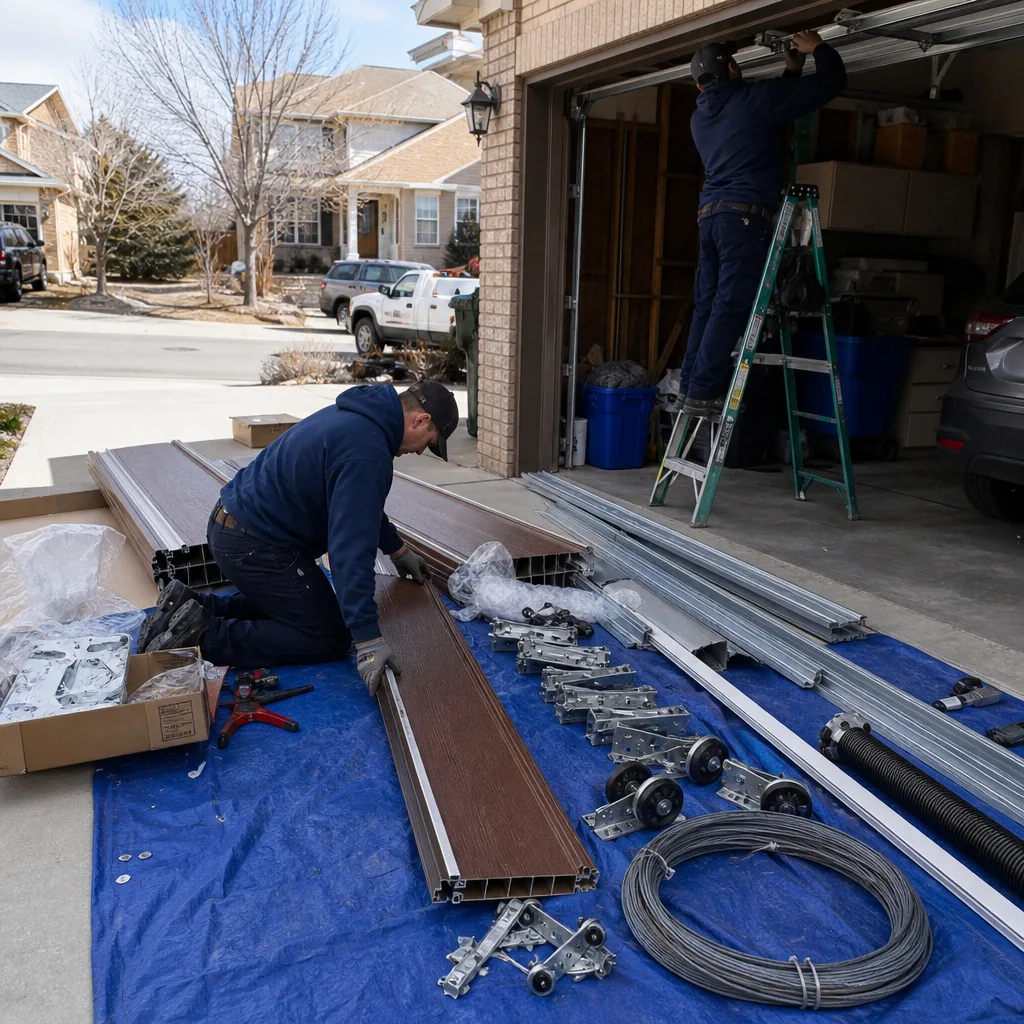
Manufacturer ratings for garage door components assume moderate climates: 50-80°F, moderate humidity, minimal UV, stable soils. Aurora meets none of these assumptions. The table below calibrates expected service life to local conditions based on our field records since 2015.
| Component | Manufacturer Rating (Temperate) | Aurora-Calibrated Lifespan | Primary Local Stressor |
|---|---|---|---|
| Torsion spring (standard oil-tempered) | 10,000 cycles / 7-10 years | 8,000-12,000 cycles / 5-7 years | Thermal fatigue from spring temperature swings |
| Torsion spring (galvanized or coated) | 15,000-25,000 cycles | 12,000-20,000 cycles / 7-10 years | Same, but corrosion resistance extends cycle life |
| Steel roller (unsealed bearing) | 10,000 cycles / 8-10 years | 6,000-8,000 cycles / 4-6 years | Dust infiltration in dry climate; monsoon humidity bloom |
| Nylon roller (sealed bearing) | 50,000+ cycles / 12-15 years | 40,000-50,000 cycles / 10-12 years | UV degradation of nylon body; bearing seal intact |
| Bottom seal (EPDM) | 5-7 years | 3-5 years | UV at elevation; freeze-thaw flex cycling |
| Perimeter weatherstripping (vinyl) | 5-7 years | 3-4 years | UV; compression set from temperature-stiffened material |
| Opener chain/belt | 10-15 years | 8-12 years | Dust accumulation on chain; thermal cycling of belt |
| Logic board (opener) | 10-15 years | 6-10 years | Voltage fluctuation from heating load cycling; dry-air static |
| Track hardware (zinc-plated) | 15-20 years | 8-12 years | Monsoon humidity corrosion; soil movement loosening |
These are ranges, not guarantees. A door in east Aurora with full sun exposure and no shade will see shorter weatherstripping life than a north-facing door in a courtyard. A heavily used door - 4+ cycles daily - will accumulate cycles faster than the time-based estimate. The value of the table is in planning: knowing that your torsion spring is at year 6 in Aurora is different from knowing it’s at year 6 in San Diego.
For homeowners tracking maintenance, we recommend photographing the component condition at each inspection and noting the cycle count if your opener displays it (many LiftMaster and Chamberlain models do). This creates the documentation trail that supports replacement decisions - evidence rather than guesswork.
A Realistic Year-Round Maintenance Schedule
Given the uneven stress pattern, here’s the maintenance calendar we implement for Aurora homeowners. It concentrates mechanical work before the damage season and prevention work in the recovery windows.
Late February (Critical Window)
- Professional torsion spring inspection: free length, tension, fatigue indicators
- Cable drum and bottom bracket inspection
- Opener force and limit verification
- Lubrication of all moving parts with climate-appropriate products
Mid-July (Monsoon Prep)
- Hardware rust inspection; replace compromised fasteners
- Lubrication refresh after dry winter/spring depletion
- Opener logic board inspection for dust accumulation
- Track alignment check after summer soil drying/contraction
September-Mid-October (Seal Window)
- Bottom seal replacement if >3 years old or showing compression set
- Perimeter weatherstripping inspection and replacement
- Threshold adjustment for frost heave preparation
- Final lubrication before cold season
Late October-Mid-November (Frost Heave Address)
- Concrete slab/threshold inspection for gap formation
- Shim and adjust threshold as needed
- Verify seal compression with paper test
- Insulate or seal any new penetrations
January (Minimal - Observation Only)
- Visual check for ice damming at threshold
- Listen for opener strain indicating spring weakness
- Do not lubricate in extreme cold - product won’t penetrate
This schedule differs from generic quarterly maintenance in two key ways: the mechanical inspection moves from fall to late February, and the seal replacement is temperature-gated rather than calendar-gated. Both adjustments reflect Aurora’s specific climate mechanics.
For homeowners who prefer professional execution, garage door installation in Aurora includes a maintenance plan option with scheduled inspections. For existing doors, a standalone inspection runs $89-$129 in the Aurora market, with the February and July visits typically combined into an annual service agreement at reduced rate.
Common Mistakes to Avoid
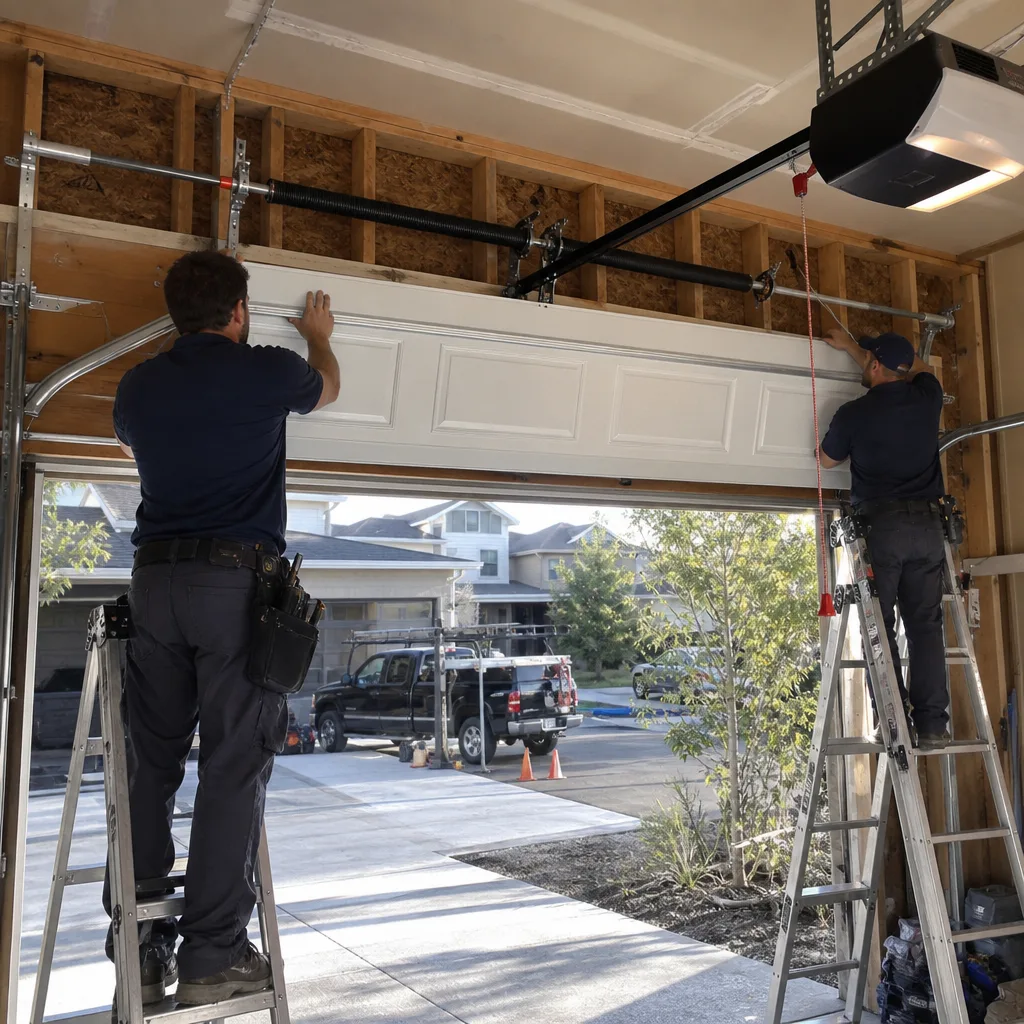
- Inspecting springs in fall instead of late February. Fall inspection catches wear from summer use but misses the winter contraction that sets up March thermal fatigue. By October, the spring has months of cold stress still ahead.
- Installing weatherstripping in November because “it’s before winter.” The silicone bond fails in cold. We’ve replaced dozens of seals in Original Aurora homes where November installation led to corner detachment by January - the homeowner paid twice for the same job.
- Using WD-40 as a garage door lubricant. It penetrates, it doesn’t lubricate. In Aurora’s dust, it becomes a grinding paste. Use lithium grease on springs, silicone spray on everything else.
- Ignoring the 1/4-inch gap at the door corner. Mice, voles, and cold air enter here. The gap often develops gradually after frost heave; homeowners adapt visually without recognizing the energy and pest consequences.
- Replacing only the broken spring on a dual-spring door. Matched spring pairs share load. An old spring paired with a new one creates imbalance, stressing the opener and the door panels. Both springs should be replaced together.
- Assuming a quiet door is a healthy door. Modern openers - especially belt-drive models from LiftMaster and Chamberlain - can mask spring weakness with force compensation. The door opens quietly until the opener fails from overwork.
- Waiting for total failure before calling. A spring that breaks at full open can drop a door suddenly. The safety cable should catch it, but the impact damages panels, hinges, and often the opener trolley. Scheduled replacement avoids collateral damage.
When to Call a Professional
Some maintenance is within homeowner capability: visual inspection, listening for changes, testing the opener reversal, and keeping the track clear of debris. Other work carries genuine risk and requires specialized tools, as explored in our DIY vs Professional Garage Door: The Aurora Homeowner’s Decision Guide.
Call a professional for any torsion spring work - the stored energy in a wound spring can cause serious injury or death if released improperly. Call for cable replacement, bottom bracket repair, or any work on the door while it is open and under spring tension. Call if the door is uneven in its travel, makes new grinding or popping sounds, or reverses unexpectedly - these indicate mechanical failure in progress, not normal wear.
For opener issues, the boundary is electrical: testing the safety sensors and force settings is homeowner-appropriate; opening the motor unit to access the logic board or capacitor is not. Capacitors in garage door openers store lethal voltage even when unplugged.
Garage door opener repair & installation in Aurora should include testing with calibrated force gauges, not just “it feels about right.” Servo Garage Doors Aurora offers free estimates in Aurora - call (720) 477-6050. Our technicians arrive with written pricing per Clause 1 of The Haven Standard, photograph findings per Clause 4, and leave with documentation of completed work.
Frequently Asked Questions
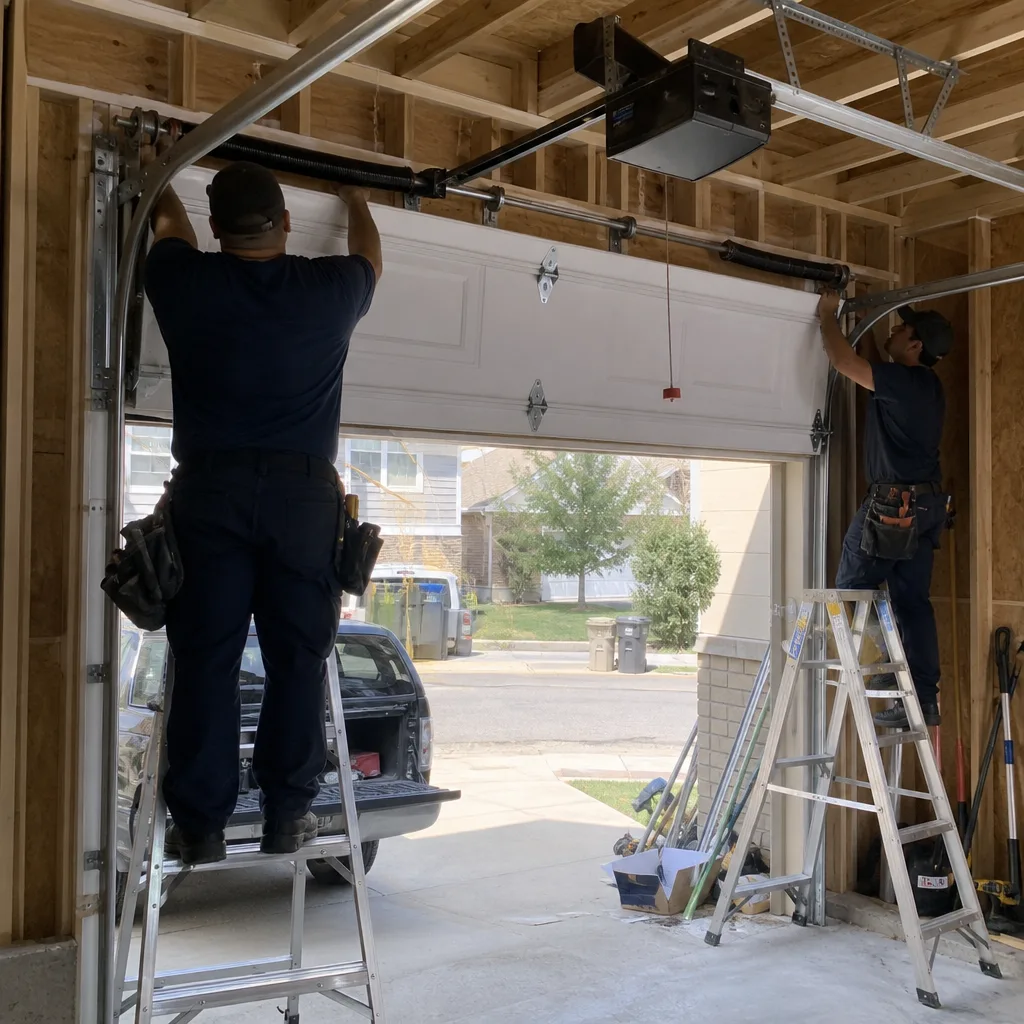
A professional seasonal inspection in Aurora typically runs $89-$129 for a standard residential door, with spring tension measurement, hardware inspection, and lubrication included. Torsion spring replacement, when needed, ranges $180-$340 for a standard pair including parts and labor. Weatherstripping replacement adds $45-$85 depending on seal type and door width. We quote a flat, written price before any work starts - Clause 1 of The Haven Standard - so the price you approve is the price on the invoice. For more guides & resources, explore our blog, or call (720) 477-6050 for an exact quote; estimates are free.
Thermal fatigue from rapid temperature cycling. Springs contract through winter, then expand and contract daily through March and April as temperatures swing 30-40°F. The micro-stress accumulates at the coil body, producing fatigue fracture. Absolute cold in January causes less damage than repeated cycling in shoulder season. This is why we inspect in late February, before the cycling begins.
Not effectively below 20°F. Lubricants thicken in cold and won’t penetrate to bearing surfaces. The practical window is September-October or late February-March when temperatures allow proper flow and the lubricant can distribute before the next cold snap. If your door is squeaking in January, the fix is likely a component replacement, not lubrication.
Look for three indicators: light penetration under the closed door (indicates gap), permanent flattening or cracking of the seal material, and the paper test - a strip of paper should drag slightly when pulled from under the closed door. If the seal is intact but the door doesn’t contact evenly, the issue is slab level or threshold adjustment, not seal replacement. We document this distinction with photos before quoting any work.
Marginally. The reduced air density at 5,400 feet slightly decreases cooling efficiency for AC motors, but modern DC openers with thermal overload protection compensate automatically. More significant is the voltage fluctuation from high heating loads in winter, which can stress the logic board. A surge protector on the opener outlet is cheap insurance. We check logic board condition during our July inspection.
High-cycle springs use thicker wire or different alloy to achieve 25,000+ cycle ratings. In Aurora’s thermal-cycling environment, the premium is worthwhile for doors used 4+ times daily. For a typical 2-car household with 2-3 daily cycles, standard springs with disciplined replacement at year 5-6 are more economical. We calculate this based on your actual use pattern, not a generic recommendation.
The Bottom Line
Aurora’s garage door wear pattern is lopsided: winter contraction and spring thermal cycling do most of the mechanical damage, while summer and fall are the windows for prevention and sealing. The homeowner who inspects torsion springs in late February, replaces weatherstripping in September, and addresses threshold gaps before hard freeze avoids the emergency calls that dominate our March schedule. Documentation - photos, measurements, written records - turns maintenance from guesswork into evidence-based care. That’s the principle behind The Haven Standard, and it’s why every Servo visit closes with a photo record of what was found and what was done.
Need a seasonal inspection or have a concern about your door’s condition? Call Servo Garage Doors Aurora at (720) 477-6050. We’ll quote a flat, written price before any work starts, inspect with photo documentation, and back our work with the 365-Day Done Right Promise. Or start at our Servo Garage Doors Aurora home page to learn more about our service standards.
Written by Marcus Deller, Owner at Servo Garage Doors Aurora, serving Aurora since 2015.