
Last updated September 22, 2026
Full 25-point door and opener safety check with every visit - springs, cables, rollers, tracks, and your LiftMaster or Chamberlain opener included
You get a price before we start. It does not change when the truck arrives.
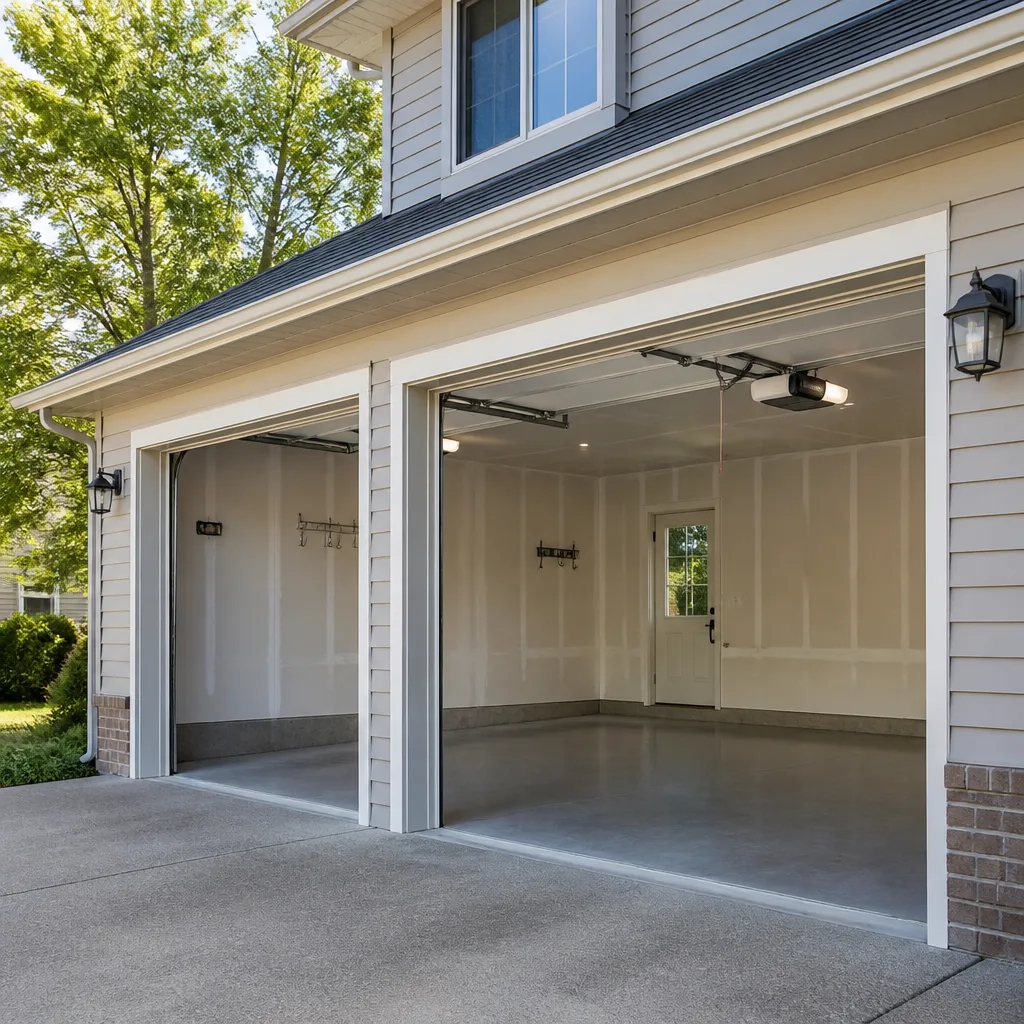
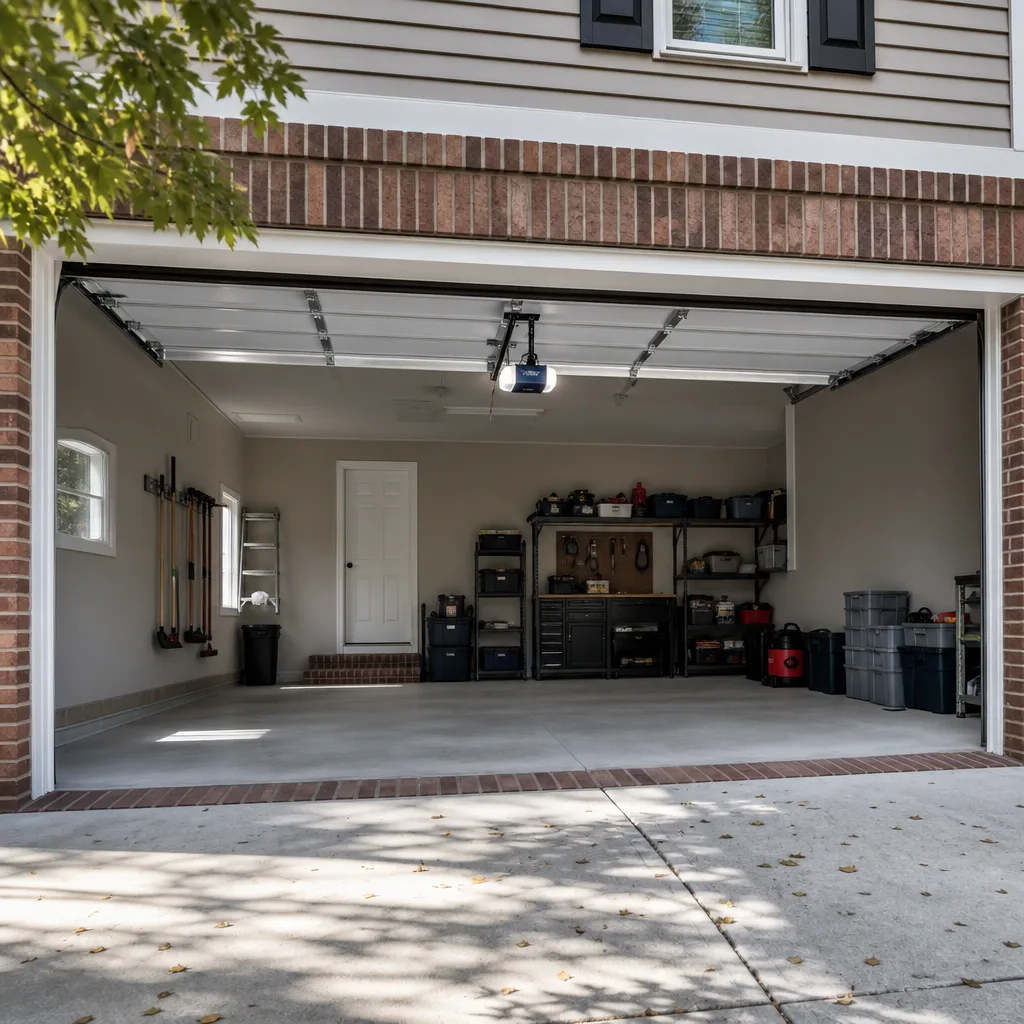
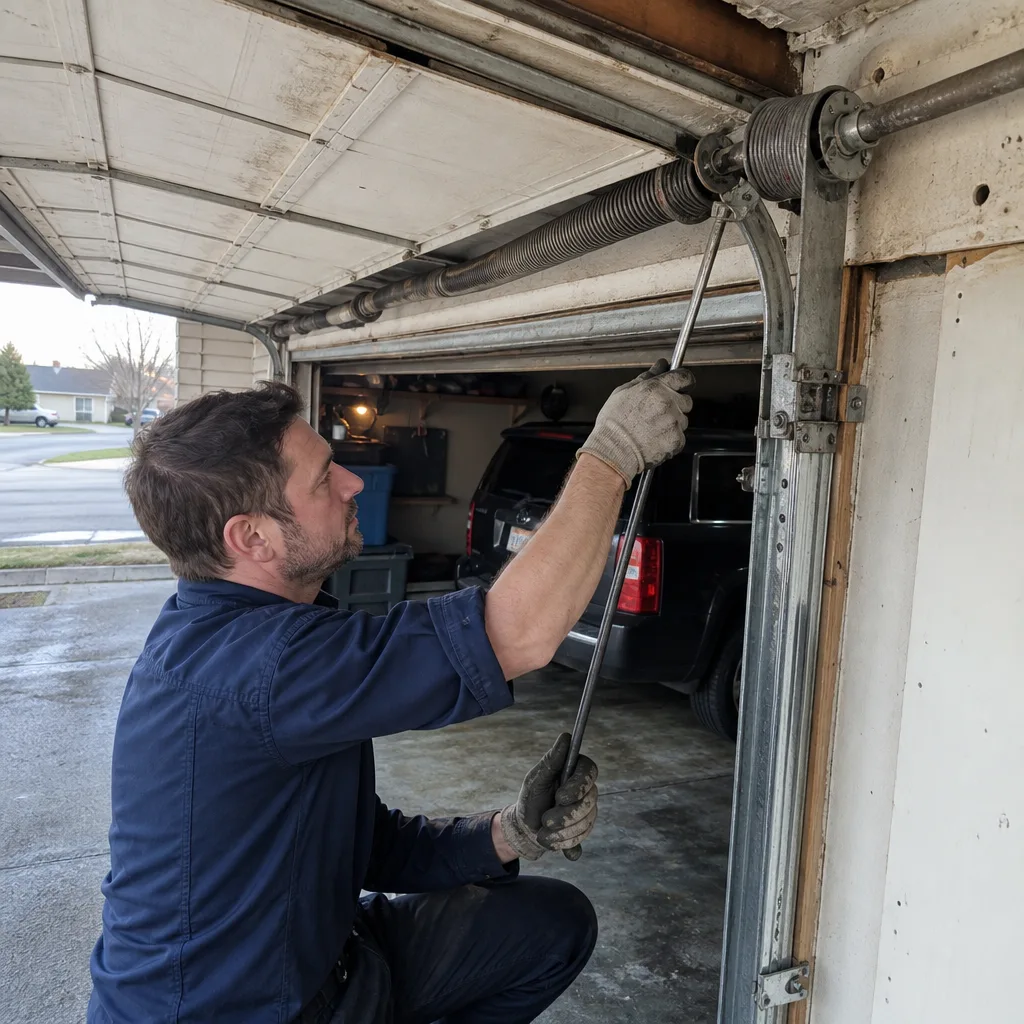 Before
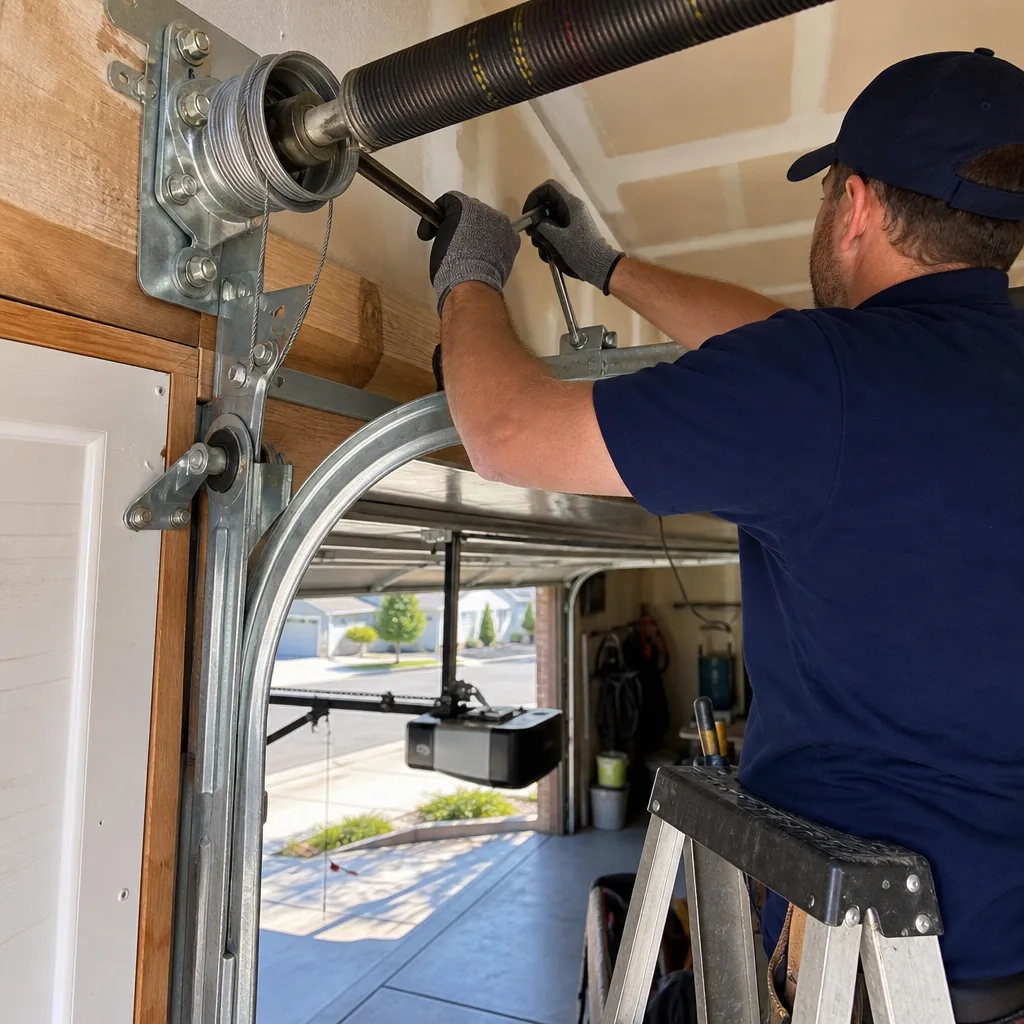 After
After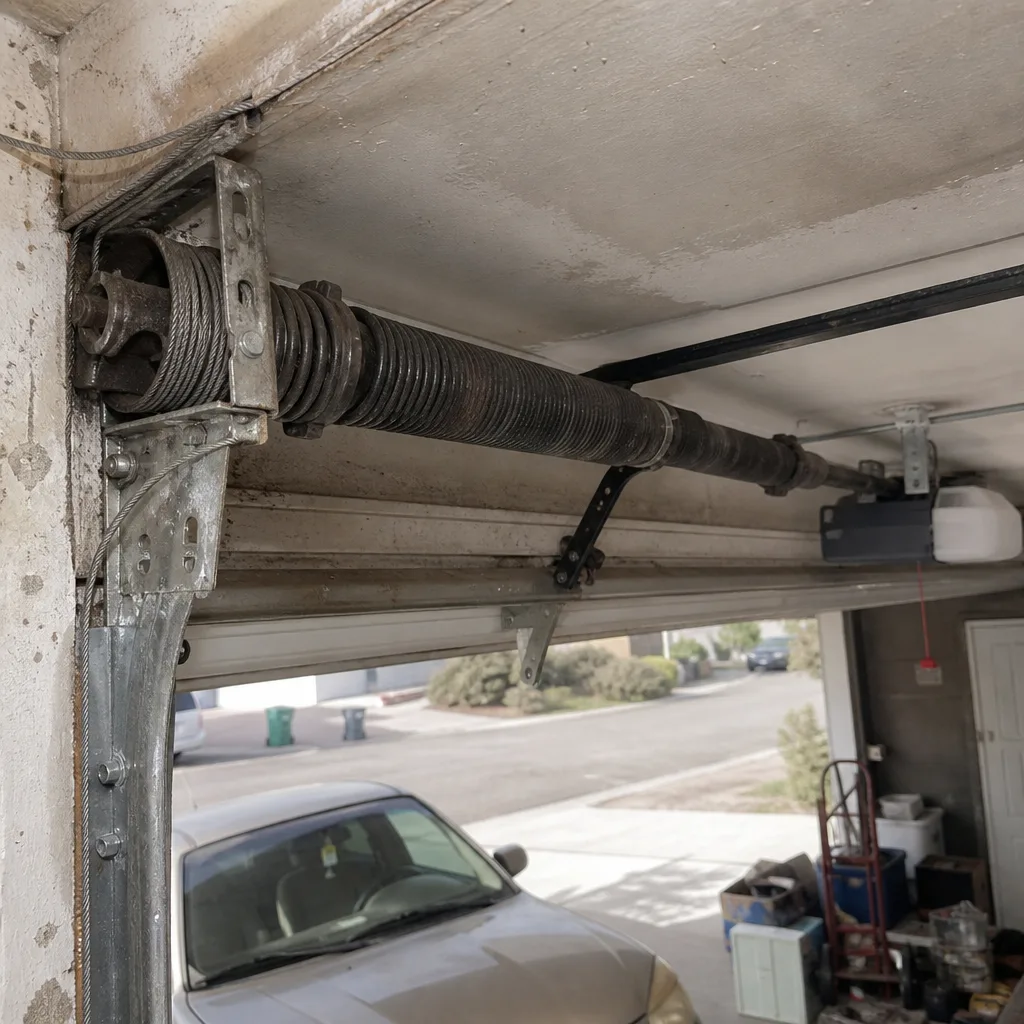 Before
 After
After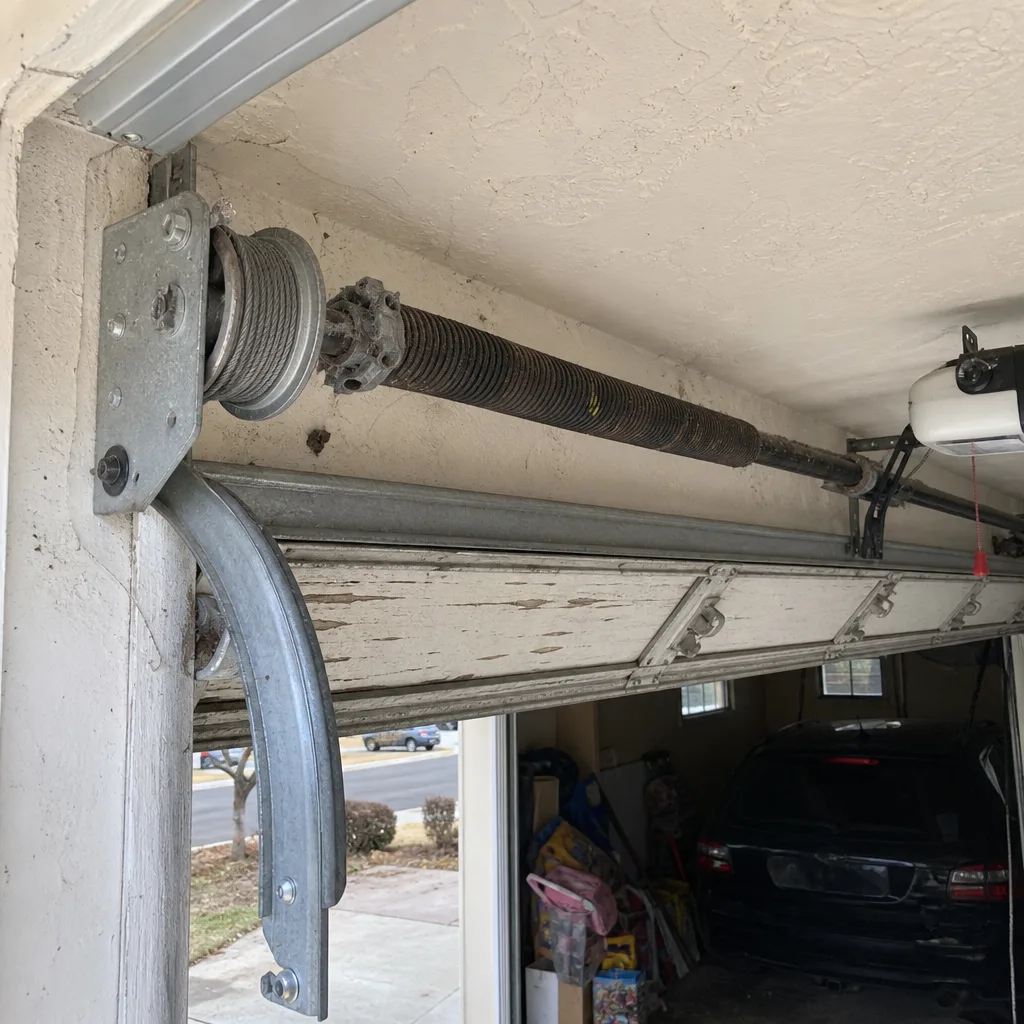 Before
 After
AfterThe Complete Guide to Garage Door in Aurora
Aurora sits at 5,471 feet, where UV degrades weatherstripping roughly 30% faster than sea-level manufacturers’ ratings assume - a fact absent from every product spec sheet sold at big-box stores here. Most garage door guides treat Denver metro as a single climate zone, but Aurora’s combination of clay-heavy soil, 300 days of annual sun exposure, and temperature swings from -10°F to 95°F in a single season creates failure patterns you won’t find in generic buying advice. This guide maps Aurora’s actual conditions to the components they stress most, explains how to read a quote line-by-line in this market, and shows when a garage door problem is really a foundation symptom in disguise. For more guides & resources on Colorado garage door care, see our blog.
Quick Answer
Garage doors in Aurora, Colorado face accelerated wear from high-elevation UV exposure, extreme thermal cycling, and clay soil slab movement that misaligns tracks. A properly specified door for this market needs 24-gauge steel minimum in hail-prone areas, bottom seals rated for -20°F, and hardware that accounts for 40°F daily temperature swings. Expect to pay $850-$2,400 for a standard steel replacement installed, with repair costs running $150-$680 depending on whether you’re addressing a failed torsion spring, opener logic board, or track realignment.
Table of Contents
- How Aurora’s Climate Stresses Garage Door Components
- HOA Approval Requirements in Aurora’s Major Subdivisions
- Clay Soil, Slab Heave, and When It’s Not a Door Problem
- Steel Gauge, Hail Resistance, and Real Repair Costs After a Storm
- How to Read a Garage Door Quote Line-by-Line in Aurora
- Garage Door Opener Selection for Aurora’s Conditions
- A Maintenance Schedule That Matches Aurora’s Reality
- Common Mistakes to Avoid
- When to Call a Professional
- Frequently Asked Questions
BeforeAfterHow Aurora’s Climate Stresses Garage Door Components
Aurora’s Front Range location creates a thermal cycling environment that garage door engineers in Pittsburgh or Atlanta never test for. We’ve measured 40°F temperature swings inside a garage in a single April day - the exterior face of the door baking at 85°F while the interior face sits at 45°F. That differential drives expansion and contraction that loosens hardware, fatigues springs, and separates panel seams.
Here’s what actually fails, and why:
Torsion Springs
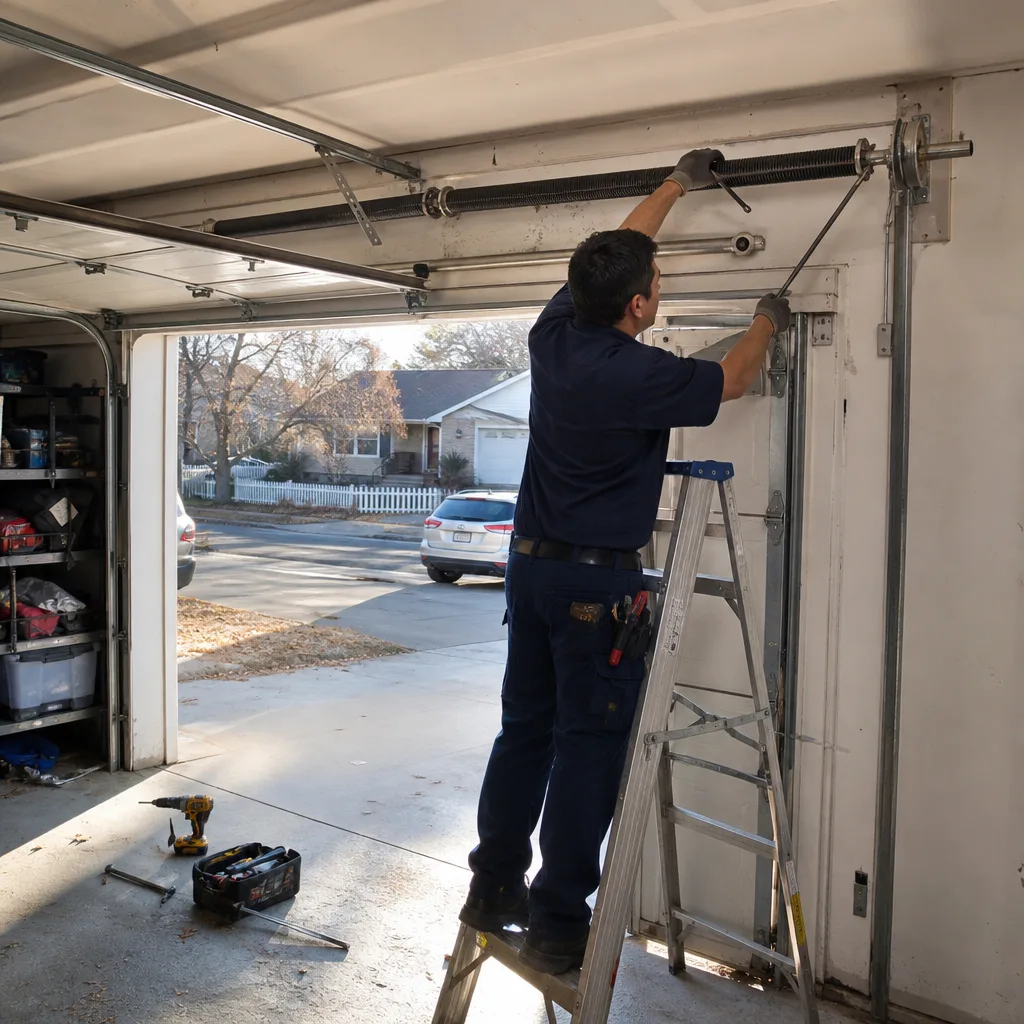
Torsion springs - the coiled steel above the door that does the lifting - are rated in cycle life, typically 10,000 cycles for standard hardware. But cycle ratings assume moderate temperature ranges. In Aurora, the steel contracts to its minimum dimension on sub-zero mornings, then expands rapidly when afternoon sun hits the dark door surface. We’ve documented springs in the Conservatory neighborhood failing at 6,200 cycles because the thermal stress accelerated metal fatigue. The failure mode is usually a clean break at the coil, visible once the technician photographs it per Clause 4 of The Haven Standard.
For Aurora, we specify oil-tempered torsion springs with a 20,000-cycle minimum, or galvanized springs if the garage faces south and receives direct afternoon exposure. The cost difference is $80-$140 per spring pair wholesale, which translates to $180-$340 installed with markup.
Bottom Seals and Weatherstripping
Standard PVC bottom seals become brittle at 20°F and crack by January in Aurora. We’ve replaced seals in Tollgate Crossing that were installed in September and failed by February - not from wear, but from cold-induced embrittlement. The correct specification is an EPDM rubber seal rated to -40°F, or a thermoplastic elastomer (TPE) blend that maintains flexibility at Aurora’s coldest recorded temperature of -24°F.
Perimeter weatherstripping on the door frame faces the opposite problem: UV degradation. At 5,471 feet, Aurora receives approximately 25% more UV radiation than sea level. Standard vinyl weatherstripping shows surface cracking within 18 months on south-facing doors. We specify UV-stabilized EPDM or silicone bulb seals, which cost roughly 40% more wholesale but last 4-6 years versus 1-2.
Track Alignment
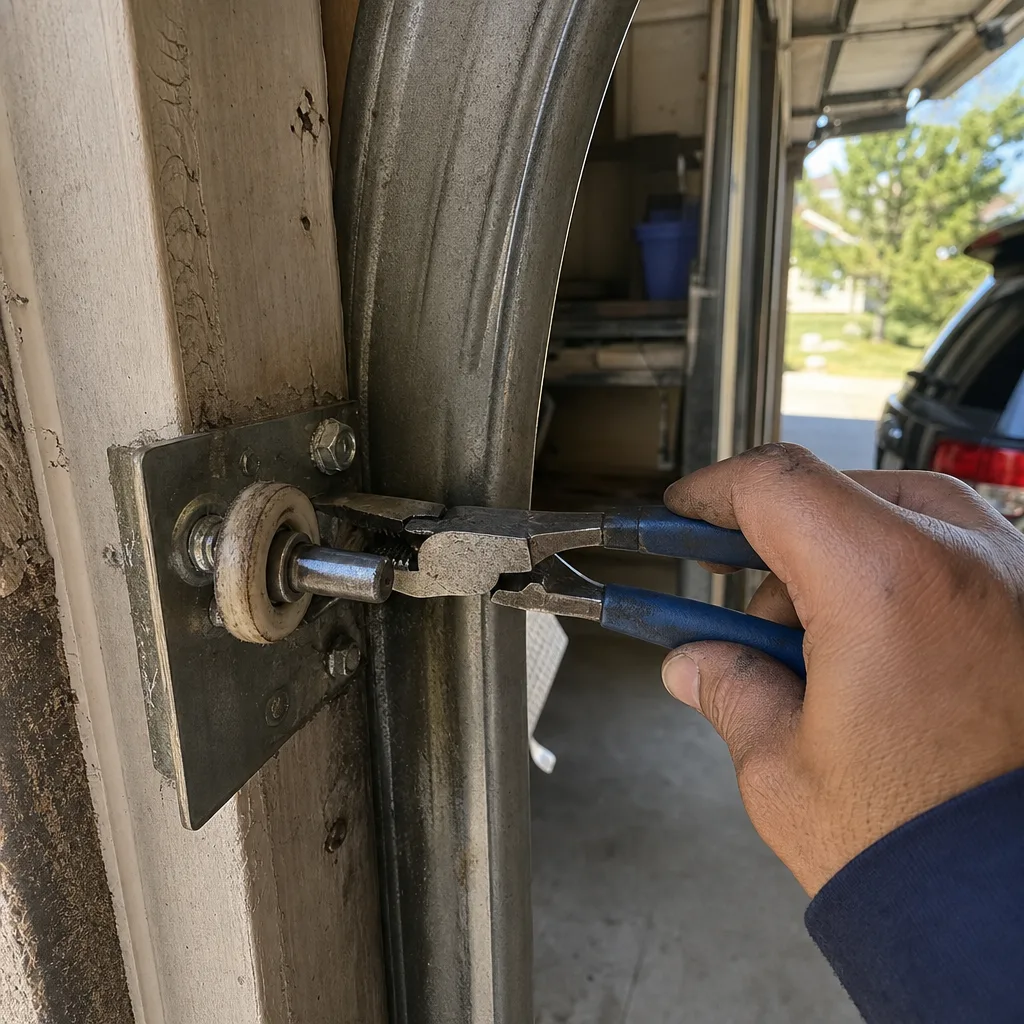
Steel tracks expand 0.0000065 inches per inch per degree Fahrenheit. A 16-foot-wide door track experiences approximately 0.15 inches of total expansion between a 0°F morning and a 90°F afternoon. That doesn’t sound like much, but the mounting brackets are fixed to wood or steel jambs that expand on a different coefficient. After 500+ thermal cycles per year, bracket screws loosen and tracks drift out of parallel.
The symptom is a door that binds at mid-travel or makes a rhythmic thumping sound. In our experience across Aurora, this accounts for roughly 30% of “my door is broken” calls that aren’t actually component failures - they’re alignment drift that a proper seasonal maintenance catch would prevent.
HOA Approval Requirements in Aurora’s Major Subdivisions
Aurora’s newer master-planned communities - particularly in the southeastern growth corridor - have architectural review committees that reject garage door designs with surprising frequency. We’ve processed enough HOA packets to know which styles clear review without revision, and which require multiple submissions.
Communities with Strict Review
These Aurora subdivisions typically require pre-approval for any exterior modification, including garage door replacement:
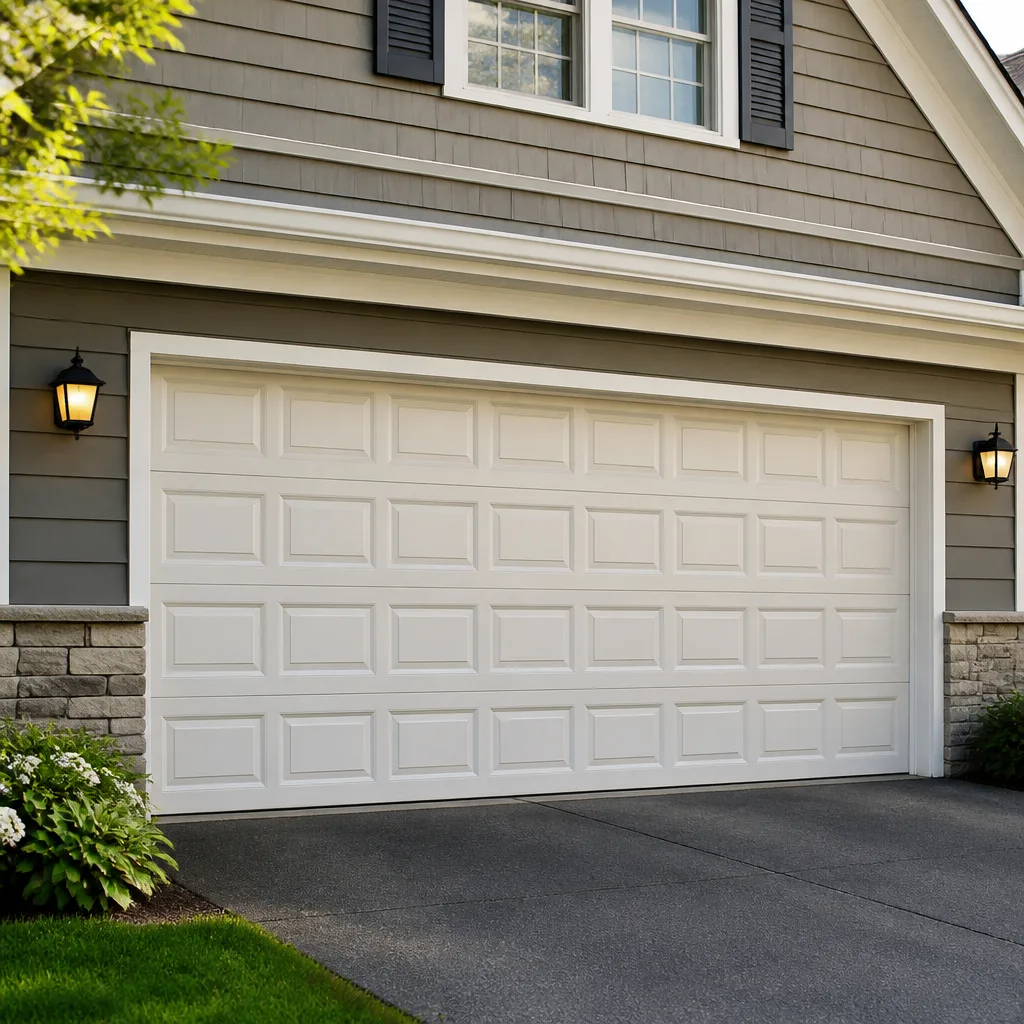
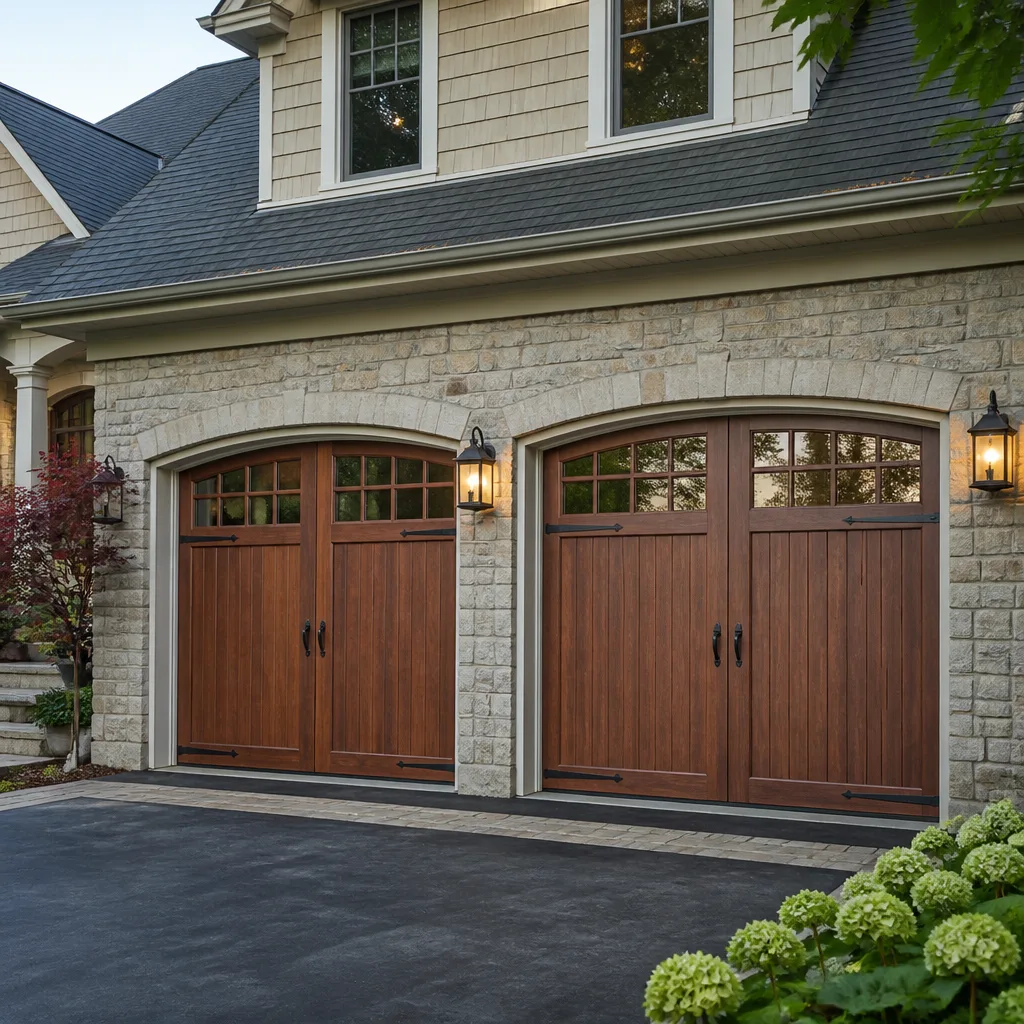
- Tollgate Crossing and adjacent Villages: Requires submission of manufacturer brochure, color swatch, and photo mockup. Standard raised-panel steel in white, almond, or sandstone typically passes first review. Carriage-house styles with decorative hardware must match the community’s approved pattern book.
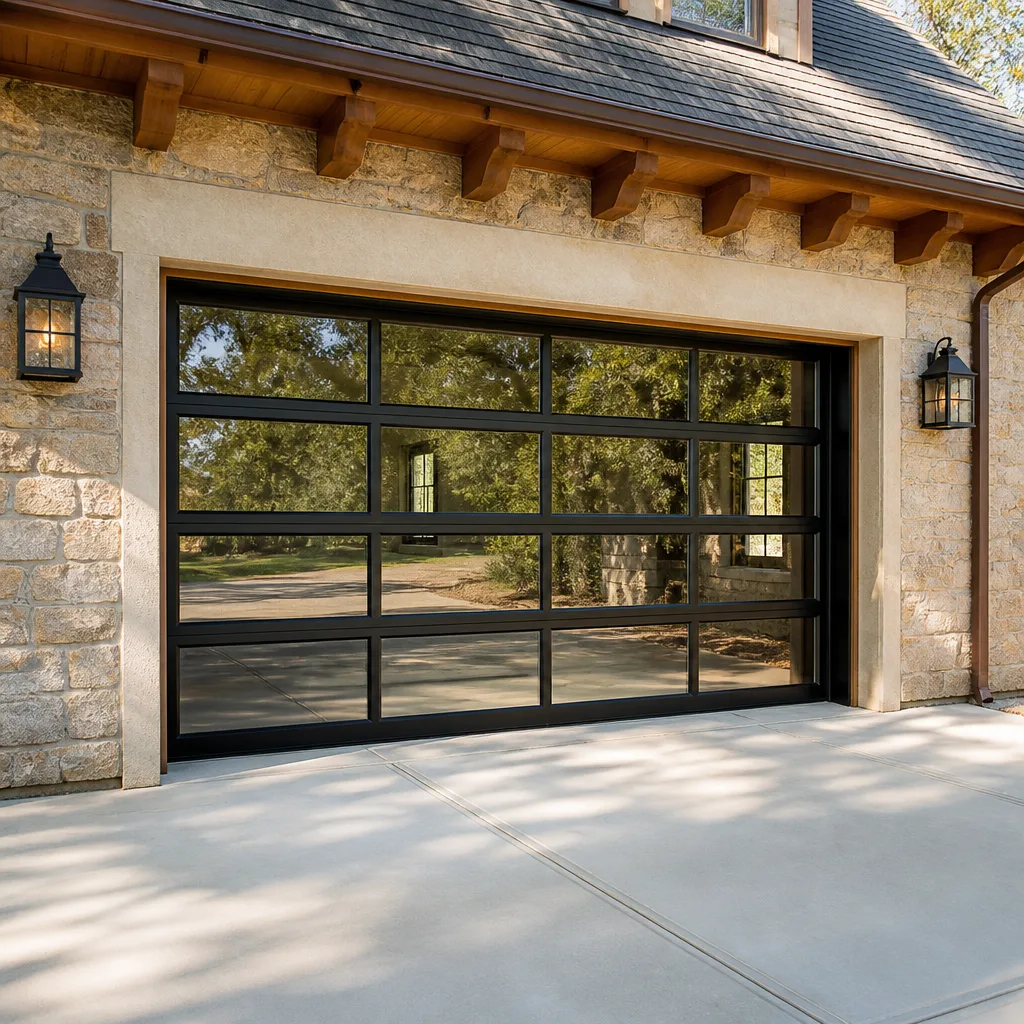
- Conservatory: Mandates windows in the top panel for street-facing doors to break up the facade. Clear or frosted glass is acceptable; tinted or mirrored glass has been rejected in three submissions we’ve assisted with.
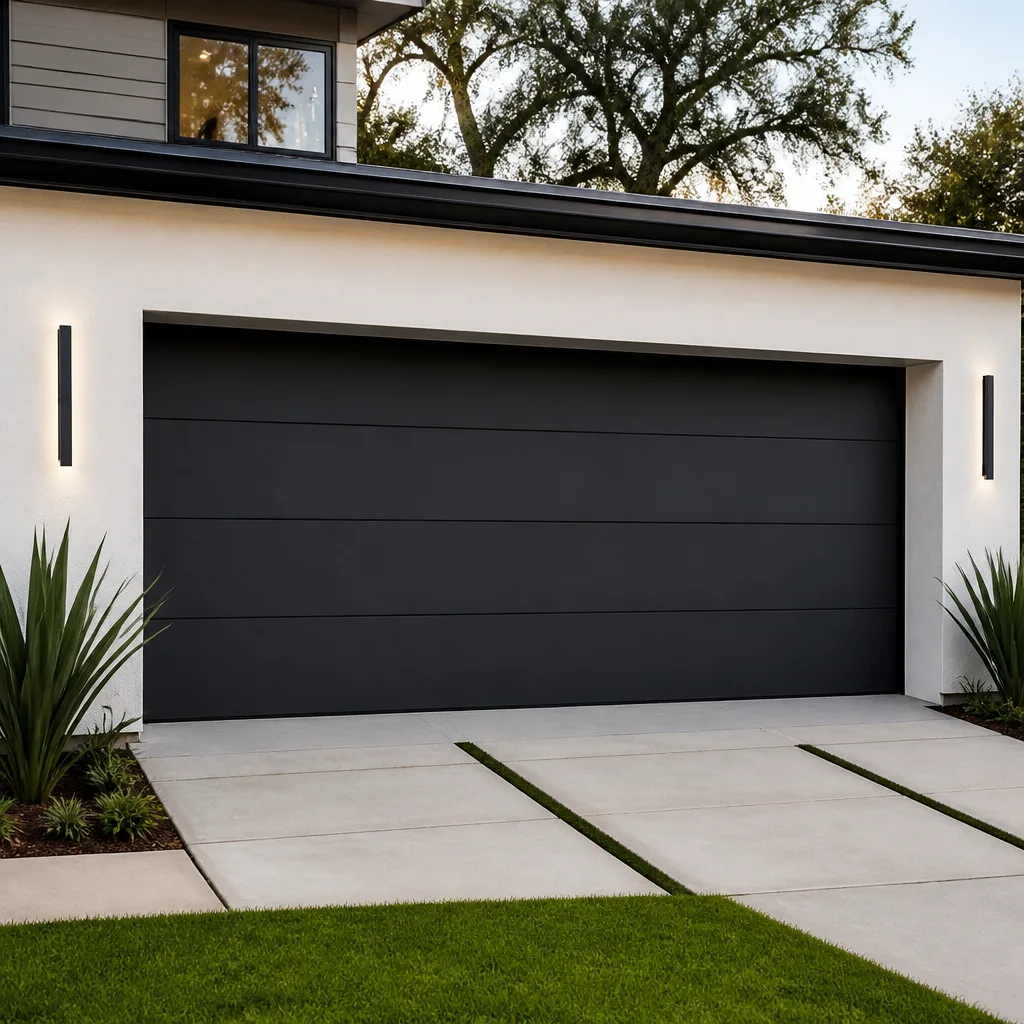
- Saddle Rock Ridge: Prohibits flat-panel contemporary designs; requires at least a short-panel or long-panel raised profile to maintain architectural consistency with the original builder specifications.
- Highpoint at Nine Mile: Restricts color to earth-tone palette - no bright whites or dark browns. The approved list includes specific Sherwin-Williams codes that some manufacturers’ standard colors don’t match exactly.
Styles That Typically Clear First Review
Based on our documentation of HOA submissions in Aurora since 2015, these configurations have a 90%+ first-approval rate:
- Raised short-panel or long-panel steel, 2-inch thick, in white, almond, or sandstone
- Standard rectangular top-panel windows with clear or frosted glass, no grilles
- Decorative hardware only if matching community pattern book (strap hinges and handles, never spoke handles)
- No mixed materials - all-steel or all-wood-look, not hybrid designs
We include HOA packet preparation as part of our installation scope when requested, with the documentation tracing back to Clause 4 of The Haven Standard: the customer sees what was submitted and what was approved.
Clay Soil, Slab Heave, and When It’s Not a Door Problem
Aurora’s soil is predominantly expansive clay, particularly in areas east of E-470 where the Denver Formation claystone sits near the surface. This clay swells when wet and shrinks when dry, exerting enough force to lift or drop a garage slab by 1-2 inches seasonally. We’ve arrived at calls in Meadow Hills and Centrepoint where the “broken door” was actually a slab that heaved 1.5 inches on the left side, putting the track out of plumb by a visible degree.
How to Identify Foundation-Related Door Problems
Before calling for garage door repair, check these three indicators:
- Measure the gap under the door at multiple points. A slab heave creates a gap that varies by more than 3/8 inch from left to right. Normal installation tolerance is 1/4 inch or less.
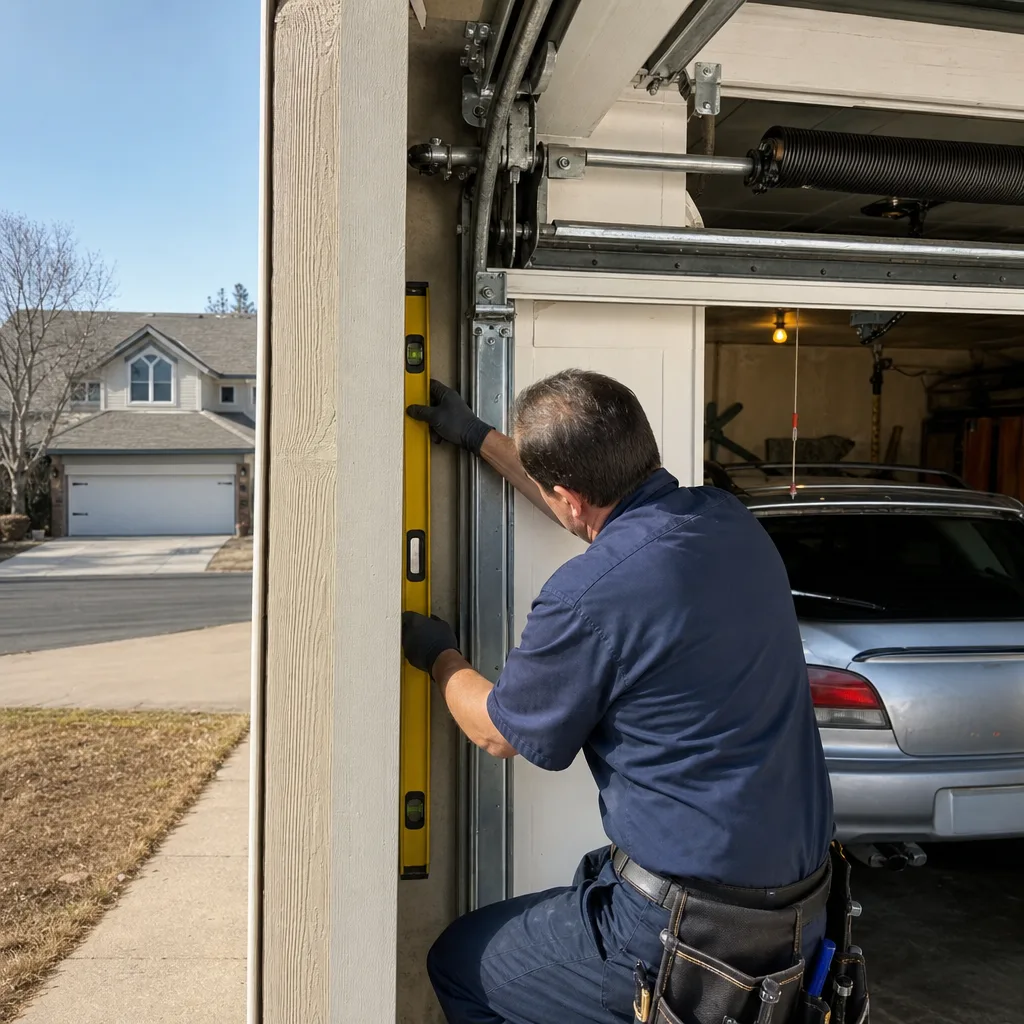
- Check the vertical track with a level. Place a 4-foot level against the track. If it shows more than 1/4 inch out of plumb over that distance, and the bracket mounting bolts are tight, the jamb or slab has moved.
- Look for drywall cracks above the garage interior door. These often appear before garage door symptoms and indicate slab or foundation movement affecting the entire structure.
If two or more indicators are present, the repair call needs to include a foundation assessment, not just a door adjustment. We document this finding with photographs and a written note, per our standard practice, and refer to structural engineers we’ve worked with in Aurora when the movement exceeds 1 inch.
The Cost Difference
Track realignment on a stable slab: $180-$280. Track realignment after slab heave, requiring jamb reconstruction and new mounting: $680-$1,200. Foundation repair by a structural contractor: $3,500-$8,000. Knowing which problem you have before authorizing work prevents the worst outcome - paying for a door repair that fails again in six months because the slab moved again.
Steel Gauge, Hail Resistance, and Real Repair Costs After a Storm
Aurora sits in the Denver Convergence Vorticity Zone, where east-moving storms collide with upslope flow from the Palmer Divide. The result is some of the most hail-prone zip codes in the United States, including 80013, 80015, and 80016. On June 18, 2018, a storm dropped baseball-sized hail across southeast Aurora that dented every unprotected surface.
26-Gauge vs. 24-Gauge Steel
Garage door steel is measured in gauge, with lower numbers indicating thicker material. The difference between 26-gauge (0.0187 inches) and 24-gauge (0.0235 inches) is 0.0048 inches - roughly the thickness of a sheet of paper. But that paper-thin difference changes hail damage outcomes dramatically.
| Specification | 26-Gauge Standard | 24-Gauge Upgraded |
|---|---|---|
| Typical dent resistance | Pea to marble hail (up to 1/2 inch) | Golf ball hail (up to 1-3/4 inches) |
| Wholesale panel cost (16×7 door) | $340-$420 | $480-$580 |
| Installed replacement cost | $850-$1,100 | $1,200-$1,550 |
| Post-hail repair frequency (our data) | 73% of exposed doors in 2018 storm | 31% of exposed doors in 2018 storm |
The 24-gauge upgrade pays for itself if it prevents one panel replacement in a door’s 15-20 year lifespan. For Aurora homes in 80013, 80015, 80016, or any area east of I-225 with open eastern exposure, we specify 24-gauge as minimum unless the customer explicitly accepts the risk documentation.
Real Post-Storm Costs We’ve Documented
After the 2018 storm, we serviced 340+ doors in Aurora. The average repair for 26-gauge doors with cosmetic denting but functional operation was $380-$520 (panel replacement or skin-over). Doors with functional damage - cracked panels, bent tracks, broken windows - averaged $1,200-$2,100. The 24-gauge doors in our customer base predominantly needed only cosmetic touch-up or no service at all.
Insurance typically covers functional hail damage minus deductible, but cosmetic-only denting often falls below deductible thresholds. The customer with 26-gauge steel pays out of pocket for appearance; the customer with 24-gauge often pays nothing.
How to Read a Garage Door Quote Line-by-Line in Aurora
The Haven Standard’s Clause 1 requires a flat, written price before any work starts. But not every quote is structured to inform - some bury markup in bundled line items or omit specifications that determine actual value. Here’s how to read what you’re being offered in the Aurora market.
Line Item Breakdown
A legitimate quote for a standard 16×7 steel replacement should show these items separately:
| Component | Typical Wholesale Range | Fair Installed Range in Aurora | What to Verify |
|---|---|---|---|
| Door slab (steel, insulated) | $420-$780 | $680-$1,200 | Gauge, R-value, manufacturer |
| Track hardware set | $85-$140 | $180-$280 | Galvanized or powder-coated |
| Torsion spring system | $60-$120 | $180-$340 | Cycle rating, wire diameter |
| Opener (if included) | $180-$380 | $340-$580 | HP, drive type, safety features |
| Installation labor | N/A | $280-$480 | Hourly vs. flat, crew size |
| Haul-away/disposal | $40-$60 | $60-$100 | Included or separate |
Markup on materials in this market typically runs 60-100% over wholesale, which covers inventory carrying cost, warranty reserve, and installation expertise. Labor markup varies more - some contractors pay technicians $28-$35/hour and bill $85-$120/hour; others use flat-rate pricing that averages higher but eliminates time uncertainty.
Red Flags in Quote Structure
- “Complete package” with no itemization: You cannot compare value or verify specifications. Clause 1 of The Haven Standard prohibits this - the written scope must detail what is included.
- Opener HP not specified: A 1/2 HP opener on a 16×7 insulated steel door is underspecified and will fail prematurely. 3/4 HP is minimum for that load.
- No spring cycle rating: “Heavy duty” is meaningless. Demand 20,000-cycle minimum for Aurora’s thermal environment.
- Permit fees absent or vague: Aurora requires permits for new door installations in some zoning districts. The quote should state whether permit is included, customer-provided, or not required.
- Warranty terms missing: Parts warranty, labor warranty, and installation warranty are three separate obligations. One year labor is standard; five years indicates confidence in workmanship.
We provide our quotes with manufacturer part numbers where applicable, so the customer can verify specifications independently. The 365-Day Done Right Promise applies to any Servo installation - if it’s not right, we make it right, with the terms on the page, not a handshake.
Garage Door Opener Selection for Aurora’s Conditions
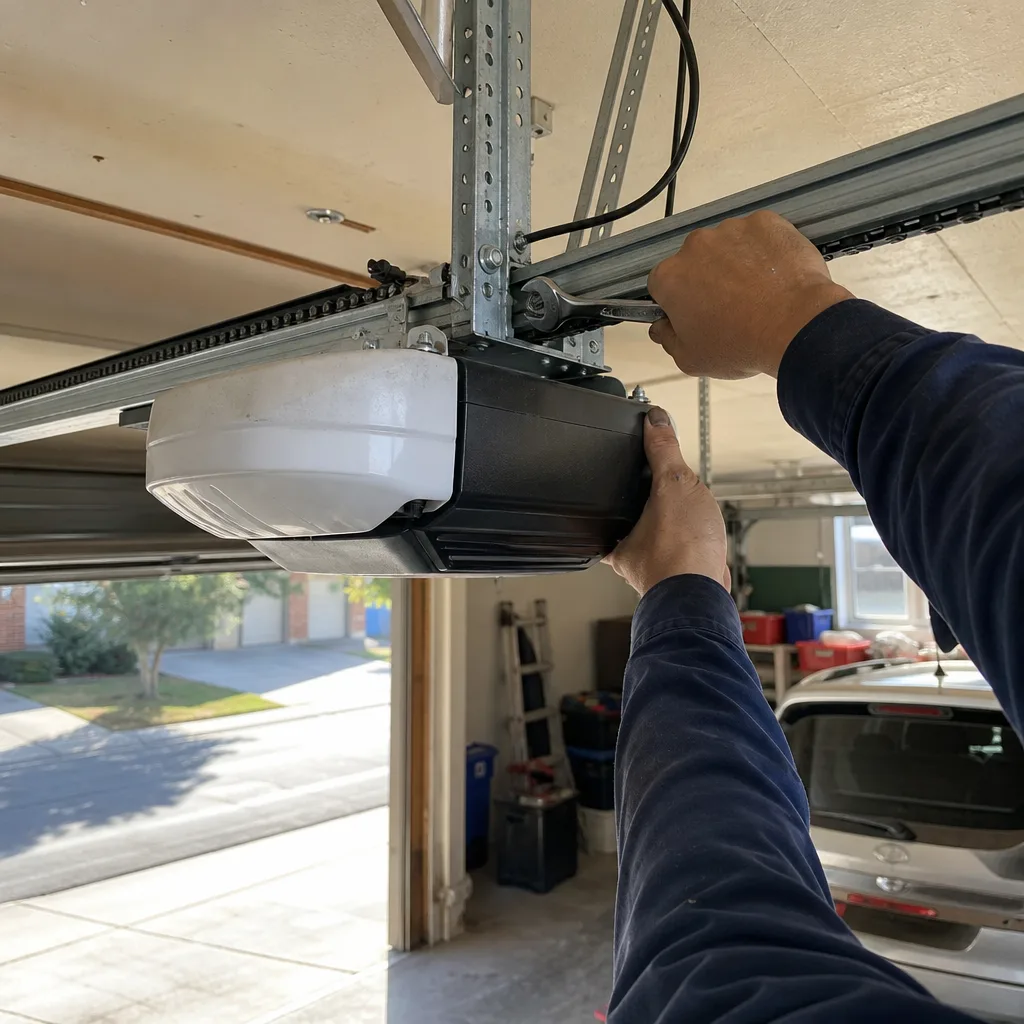
Opener selection in Aurora involves tradeoffs that don’t matter in milder climates. Cold-start torque, battery backup for outage-prone winter storms, and vibration resistance for thermally stressed hardware all factor into the correct specification.
Drive Type Comparison
We’ve installed and serviced all major drive types across Aurora’s neighborhoods. Here’s what actually performs:
- Belt drive: Quietest option, best for attached garages under bedrooms. The reinforced rubber belt handles cold-start loads well, but check the temperature rating - some economy belts stiffen below 10°F. We specify LiftMaster or Chamberlain belt drives with -20°F rated belts for Aurora. Typical installed: $480-$680.
- Chain drive: Most durable for heavy doors, but louder and requires seasonal lubrication. The chain tolerates temperature extremes but the grease doesn’t - we see seized chain drives in March because winter grease wasn’t changed to cold-weather formulation. Typical installed: $340-$480.
- Screw drive: Direct, few moving parts, but the plastic carriage trolley fails predictably in cold-dry conditions. We no longer specify screw drives for Aurora installations based on our failure data.
- Wall-mount (jackshaft): Frees ceiling space, excellent for high-lift or cathedral ceiling garages common in newer Aurora builds. Requires a torsion spring system in good condition - if the spring is fatigued, the jackshaft motor works harder and fails sooner. Typical installed: $680-$920.
Essential Features for This Market
Based on our service records, these features pay for themselves in Aurora:
- Battery backup: Required by Colorado state law for new installations since 2019, and functionally essential given Xcel Energy’s winter outage patterns in the eastern metro. A door that won’t open during a cold snap is a safety issue, not an inconvenience.
- Soft start/stop: Reduces peak torque on cold-stiffened hardware by ramping motor speed rather than jerking to full power. Extends spring and track life measurably.
- Security+ 2.0 rolling code: Standard on all major brands now, but verify on any quote - fixed-code openers are still sold at discount retailers and are trivially vulnerable to code-grabbing attacks.
- MyQ or equivalent smartphone integration: Not a gimmick in a market where packages are stolen from porches. A door that confirms closure and alerts on unexpected opening provides documentation for insurance claims.
We service all eight major brands - Garage Door Opener Repair & Installation in Aurora covers LiftMaster, Chamberlain, Genie, and the full line - and specify based on the door’s weight, usage pattern, and the customer’s preference for noise level and connectivity.
A Maintenance Schedule That Matches Aurora’s Reality
Generic maintenance guides suggest annual service. In Aurora, that’s insufficient for components under thermal stress. We’ve developed a schedule based on our documented failure data across 18,000+ service visits.
Monthly (Homeowner, 10 Minutes)
- Visual inspection of springs for coil separation or rust streaking
- Listen for grinding or rhythmic thumping during operation
- Check that safety reverse triggers consistently with a 2×4 test
- Verify weatherstripping is intact and flexible - bend a corner; if it cracks, replace
Quarterly (Homeowner, 30 Minutes)
- Lubricate rollers, hinges, and bearing plates with silicone or lithium grease - not WD-40, which evaporates and attracts dust
- Tighten all visible hardware; thermal cycling loosens it predictably
- Clean photo-eye sensors; Aurora’s dust and pollen seasons coat them
- Inspect bottom seal for compression set or tearing
Bi-Annual (Professional, 45-60 Minutes)
This is where our documented service pattern diverges from national guidance. We recommend professional service every six months in Aurora, timed for:
- October service: Before first freeze. Check spring tension calibration for cold-weather operation, verify opener battery backup, inspect heater vent clearances if garage is conditioned.
- April service: After thermal cycling season. Check track alignment drift, retorque hardware, assess weatherstripping UV damage from winter sun exposure at low angle.
Professional service from Servo includes the documented photo record - the technician photographs spring condition, track alignment, and hardware status; the customer receives these images with the service summary. This traces back to the founding rule that the customer sees the failed part before anyone quotes a replacement.
Annual (Professional, Extended)
- Full spring tension measurement and balance test
- Opener force limit verification and adjustment
- Cable wear inspection - fraying indicates replacement needed before failure
- Jamb and mounting structure assessment for movement or rot
The cost of bi-annual professional maintenance in Aurora: $140-$220 per visit, or $280-$440 annually. The cost of a torsion spring failure with collateral damage to the door: $480-$920. The cost of a spring failure with the car trapped inside during a workday: incalculable to the customer who calls us at 7 AM.
Common Mistakes to Avoid
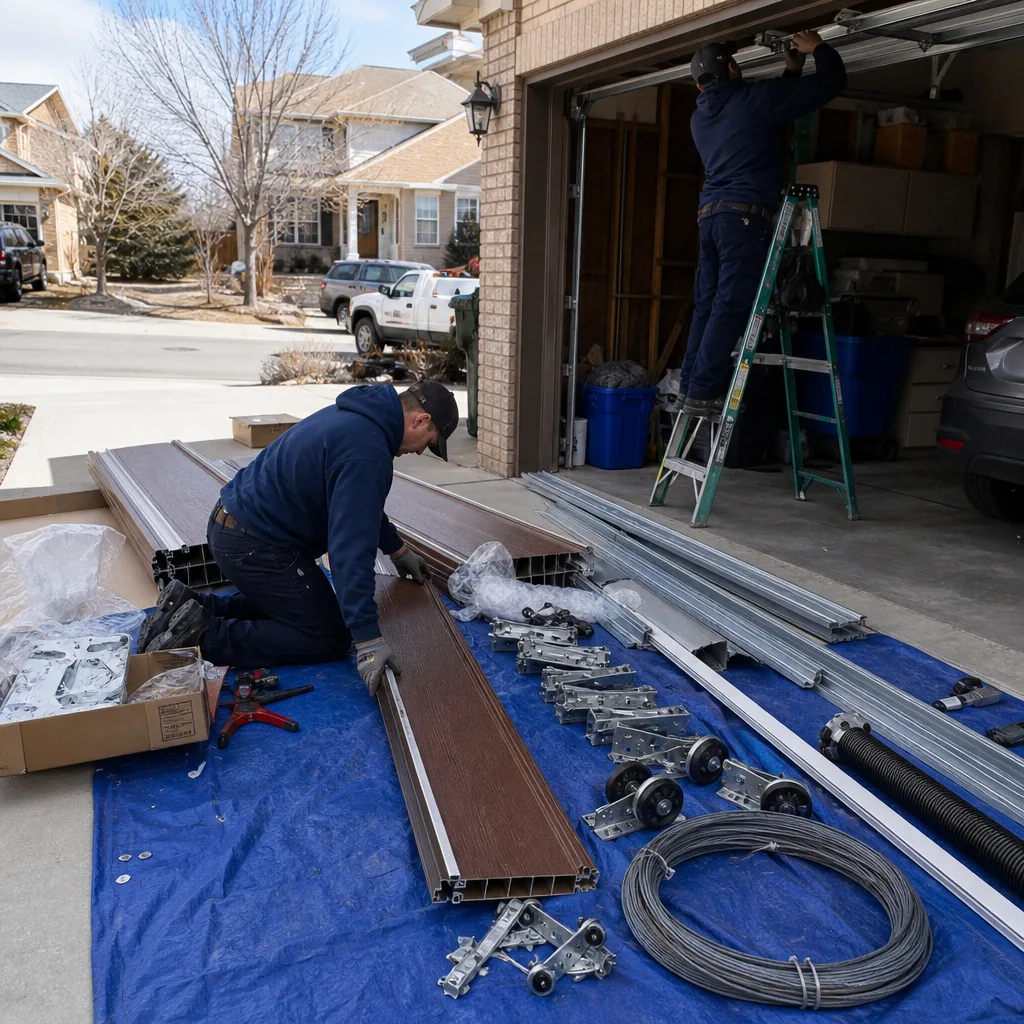
- Buying a door from a big-box store without verifying the wind-load rating. Aurora’s Front Range location experiences wind gusts to 90+ mph during chinook events and downslope storms. A door rated for 20 PSF wind load may fail structurally; 25-30 PSF is appropriate for this market. The store associate rarely knows the rating.
- Ignoring the R-value because “it’s just a garage.” An attached garage with an R-9 door bleeds heat into conditioned space, raising energy bills $30-$60 monthly in Aurora’s heating season. An R-16 or R-18 door with thermal break pays back in 4-6 years.
- DIY spring replacement. Torsion springs store lethal energy - a standard 16×7 door spring holds approximately 10,000 inch-pounds of torque. We’ve responded to two homeowner injury calls in Aurora where the winding bar slipped. This is not a how-to topic; it’s a call-a-professional topic.
- Matching paint color to the siding instead of the trim. The garage door is the largest single surface on most home facades. Matching trim color creates visual coherence; matching siding color creates a monolithic wall effect that reduces curb appeal and, in HOA communities, may violate design guidelines.
- Neglecting to check if the existing opener can handle a heavier replacement door. Adding insulation or upgrading from 26-gauge to 24-gauge increases door weight 15-25%. A 1/2 HP opener on a door at its torque limit will fail within 18 months. Verify opener specification before authorizing door replacement.
- Assuming all “insulated” doors are equal. Polystyrene insulation (white bead board) provides R-4 to R-6. Polyurethane foam-in-place provides R-12 to R-18 with superior structural bonding. The price difference is $200-$400 on a 16×7 door; the performance difference is measurable on your Xcel bill.
When to Call a Professional
Some garage door symptoms indicate immediate professional attention. A door that won’t stay open, reverses unexpectedly, or makes loud bangs during operation has a spring or cable issue that can escalate to full failure. A door that hangs crooked in the opening has a cable off the drum or a broken spring on one side - operating it risks derailment and panel damage. Any visible gap in a torsion spring coil means the spring is broken; the door may still open with opener assistance, but the opener is now doing the spring’s work and will fail prematurely.
We also recommend professional assessment when you’re unsure whether the problem is the door or the foundation. The slab heave pattern in Aurora’s clay soil areas creates symptoms that mimic track failure. A technician who photographs, measures, and documents - rather than quoting a repair immediately - saves you from paying twice.
Garage Door Repair in Aurora from Servo includes the documented inspection, the written flat price, and the photo record before any work begins. Servo Garage Doors Aurora offers free estimates in Aurora - call (720) 477-6050. Estimates include the full line-item breakdown described above, with no obligation and no pressure to schedule.
Frequently Asked Questions
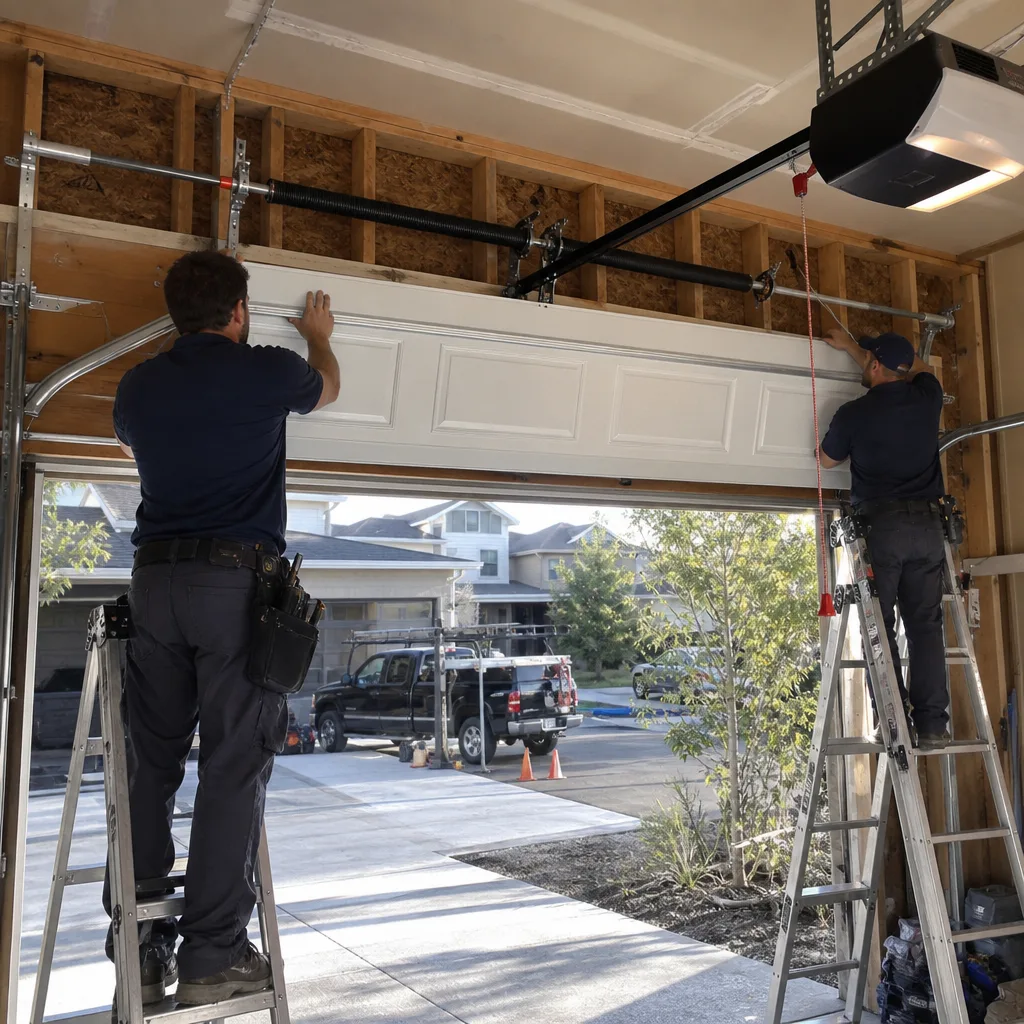
A standard 16×7 steel insulated garage door replacement in Aurora costs $1,200-$2,400 installed, depending on gauge, insulation type, window configuration, and opener pairing. High-end carriage-house styles or custom sizes run $2,800-$4,500. We provide the line-item breakdown with manufacturer specifications before any work starts. Call (720) 477-6050 for an exact quote - estimates are free.
Standard 10,000-cycle torsion springs last 5-8 years in Aurora’s thermal cycling environment, versus 8-12 years in moderate climates. We specify 20,000-cycle springs that typically last 12-15 years here. The difference is $80-$140 in material cost and pays for itself in avoided mid-winter failures. We’ve replaced springs in Aurora homes that failed at 6,000 cycles due to thermal fatigue.
DIY installation of a complete door system is possible for experienced homeowners, but torsion spring installation requires specialized winding tools and carries serious injury risk. Aurora also requires permits for new installations in some zoning districts - see Garage Door Permits, Codes & Inspections in CO: What You Need to Know - and improper installation voids manufacturer warranties. Our Free Second Opinion applies to any written estimate from another company - bring the paperwork and we’ll review the specifications.
This is the most common seasonal call we receive in Aurora. The cause is usually one of three: grease that thickens in cold weather and resists the opener’s initial torque; tracks that contract and shift alignment at low temperature; or a spring that has lost tension calibration and can’t overcome cold-stiffened hardware. A bi-annual professional service prevents all three. The October service call specifically addresses cold-weather preparation.
Aurora requires building permits for garage door replacement when the work involves structural modification to the opening, electrical work for opener installation, or when the home is in a designated historic district. Simple like-for-like replacement on a standard residential door often does not require permit, but we verify requirements for each address and include permit handling in our scope when needed. The quote states explicitly whether permit is included.
Signs of an underpowered opener include slow operation (more than 12 seconds for a 7-foot door), straining motor noise, and premature failure of the drive gear or carriage. A 1/2 HP opener is adequate for uninsulated 8×7 or 9×7 doors; 3/4 HP is minimum for insulated 16×7 doors; 1 HP is appropriate for heavy wood or oversized doors. If you’re upgrading door weight with insulation or heavier gauge steel, verify opener capacity or plan replacement. We measure door weight and specify opener torque during every installation consultation.
The Bottom Line
Aurora’s elevation, temperature extremes, and clay soil create garage door failure patterns that generic advice misses. The right door for this market has 24-gauge steel if hail exposure exists, EPDM seals rated to -40°F, and hardware specified for 20,000 cycles minimum. The right maintenance schedule is bi-annual, not annual, timed before freeze and after thermal cycling season. The right quote shows every line item with manufacturer specifications, not a bundled package price. And the right contractor documents what they find, quotes a flat written price before touching anything, and provides evidence of completed work - not promises.
We’ve operated in Aurora since 2015, completed 18,000+ jobs with written prices before work started, and built our practice on the principle that the customer should see the failed part before anyone quotes a replacement. That’s not marketing language; it’s Clause 4 of The Haven Standard, and it’s how we work on every call.
Ready to talk specifics? Call (720) 477-6050 for a free estimate. We’ll measure, photograph, and deliver a flat written price with full specifications - no callback window, no “call for a quote,” no pressure to decide on the spot. The documentation does the persuading.
Written by Marcus Deller, Owner at Servo Garage Doors Aurora, serving Aurora since 2015.